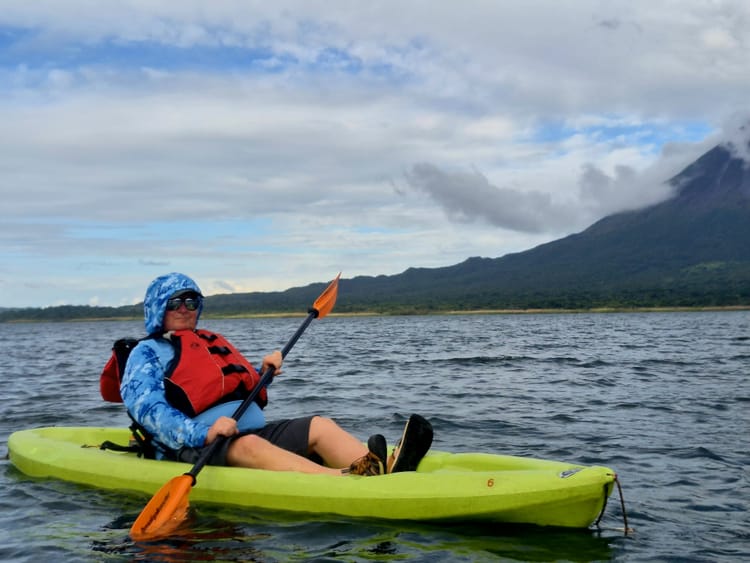
Costa Rica Days 11–12: Sarapiquí River Wildlife, Chocolate Traditions, Hot Springs, and the Reality of La Fortuna Waterfall
If you’re planning a trip, I keep the booking tools I actually use at https://www.traveladventurescurated.com/about/
Days 11 and 12 were spent based in the La Fortuna / Arenal region, combining wildlife encounters, local traditions, and some of Costa Rica’s most famous attractions — along with a few important reality checks that glossy brochures tend to leave out.
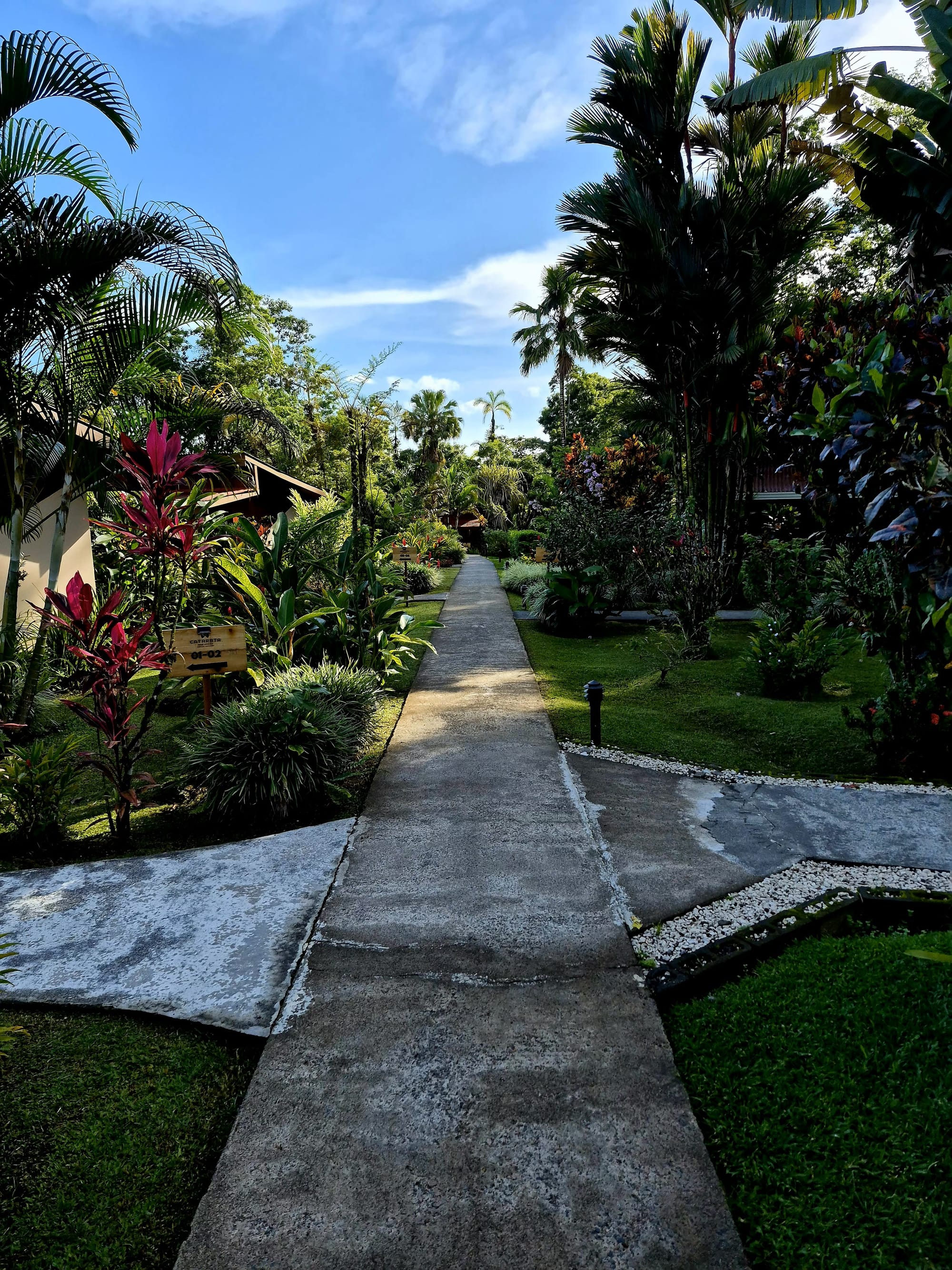
We stayed at Catarata Eco Lodge, a family-owned and run property that immediately stood out for its warm, personal service. The receptionist was genuinely friendly and extremely helpful — the kind of welcome that sets the tone for a stay.
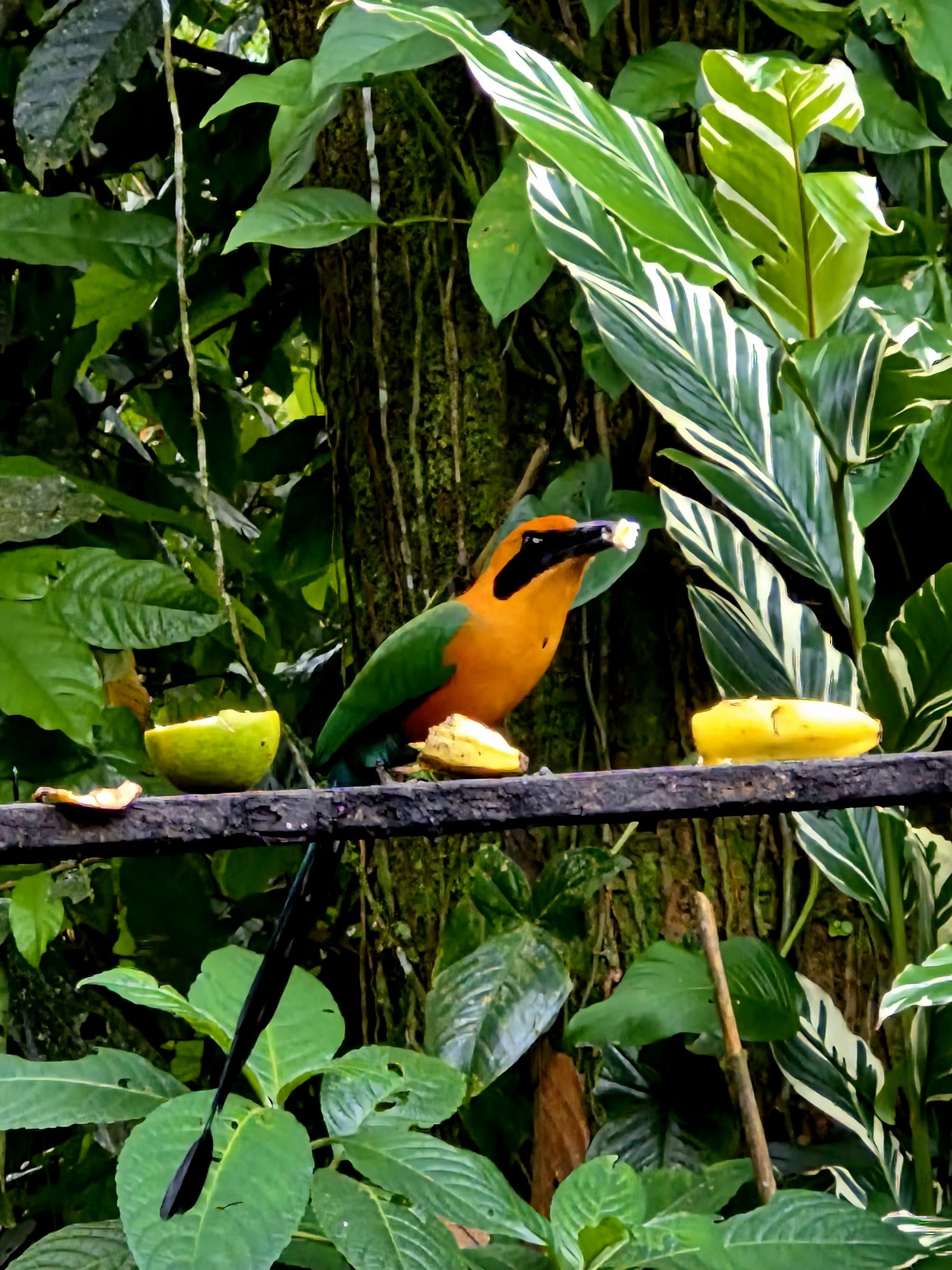
One of the lodge’s highlights was the bird feeding table, which attracted a steady stream of visitors throughout the day. Sitting with a coffee and watching species arrive — including toucans among many others — became a daily ritual and one of the most memorable parts of our time there.
For dinner, we walked to a nearby local soda, Mama Rosa’s, for hearty Costa Rican food served in rustic surroundings. Simple, filling, and full of flavor — exactly what you want after an active day.
Day 11: Sarapiquí River Float and Wildlife
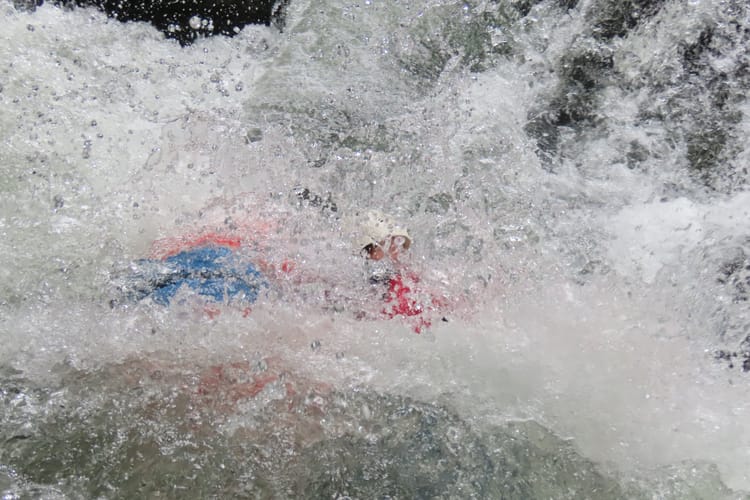
The day began with breakfast overlooking the bird table before heading out for a river float on the Sarapiquí River. The river was moving fast, and while we did see wildlife, the experience felt rushed. The raft was rarely positioned to allow extended viewing or photography, which was disappointing for a seasoned nature enthusiast. We spotted caiman, crocodile, turtles, tiger heron and vultures.
The highlight of the day came at the lunch stop, where we were introduced to several sugarcane-based drinks: fresh sugarcane juice, hot sugarcane tea, cold sugarcane tea and sugarcane moonshine. Mixing the moonshine with both the hot and cold tea turned out to be dangerously good — smooth, warming, and with a serious kick. Simple local traditions often leave the strongest impressions.
The chocolate-making tour was brief but perfectly pitched. We tasted the cacao fruit, sampled roasted beans, and finished with the final chocolate product — made using a 35:35:30 ratio of cacao, milk, and sugar. The result was excellent. One detail that stuck with me: male mosquitoes are the primary pollinators of cacao flowers. Not a widely known fact — and not one you forget once you hear it.
Costa Rica is full of small, practical lessons that only emerge on the ground:
- Pineapple is the snack of choice on tours. Guides cut it lengthwise into quarters, remove and discard the tough central core — the part many people are mildly allergic to — then slice the flesh into segments, offsetting every second piece so guests can easily grab one. Simple and thoughtful.
- Freshwater fishing is offered as an activity in several regions, something I hadn’t associated with Costa Rica before this trip.
- When hiking, use your sense of smell. Howler monkey droppings have a distinctive odor, and once you recognize it, it often alerts you to their presence before you hear or see them.
- Sloths typically descend from the canopy about once a week to defecate and urinate at the base of a tree. Their digestion is extremely slow and bacteria-driven, explaining their low energy levels. Sloths are most closely related to anteaters, not monkeys — a common misconception.
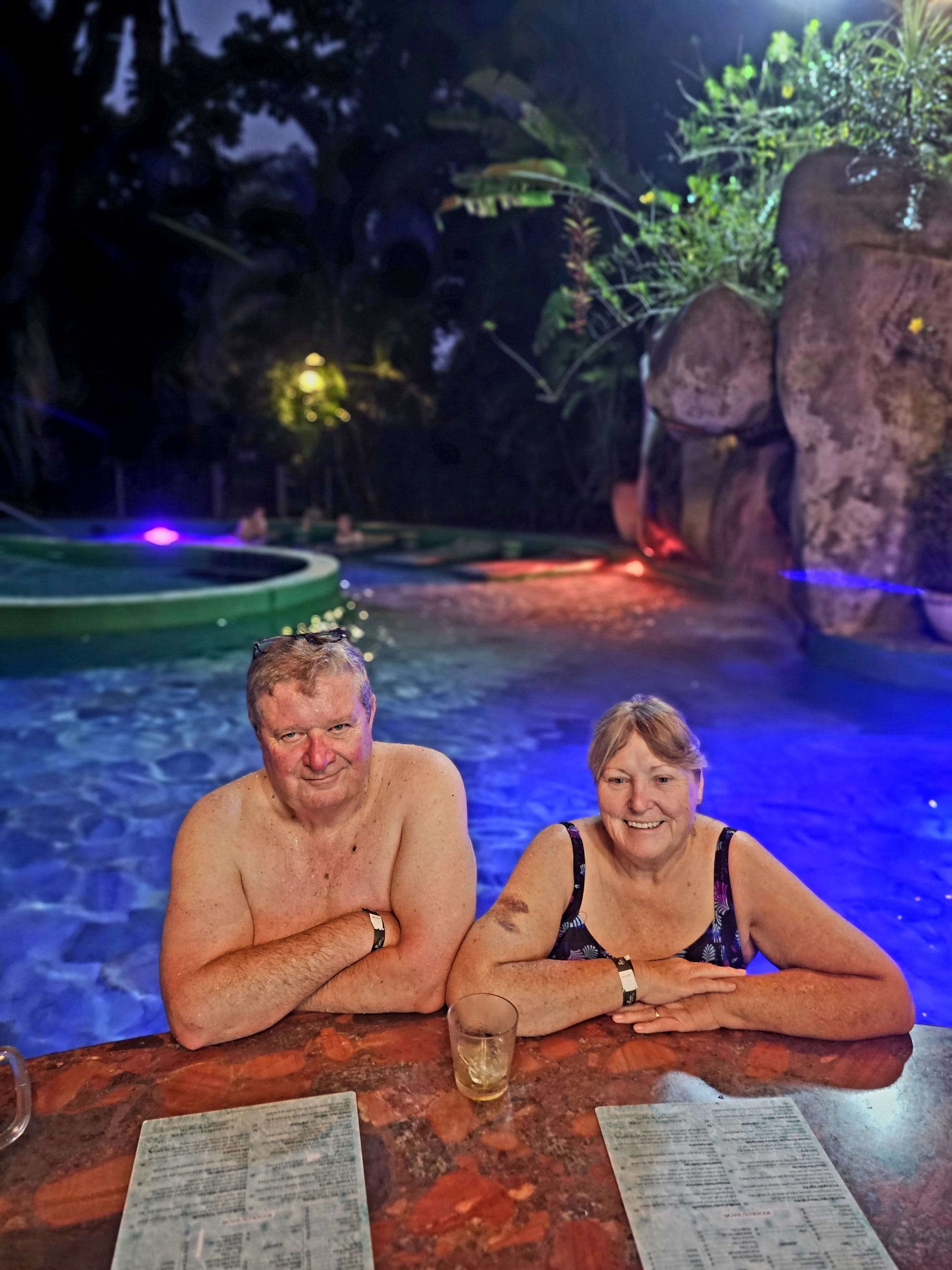
That evening we visited Paradise Hot Springs, an elegant complex with multiple pools at different temperatures and a swim-up wet bar. We soaked for around two hours, drinks in hand. The Pura Vida cocktail comes highly recommended. Dinner was a buffet with a wide range of options, and as darkness fell, colored lights illuminated the pools, creating a genuinely magical atmosphere. This was easily one of Colleen’s favorite experiences of the entire trip.
Day 12: Horseback Riding to La Fortuna Waterfall
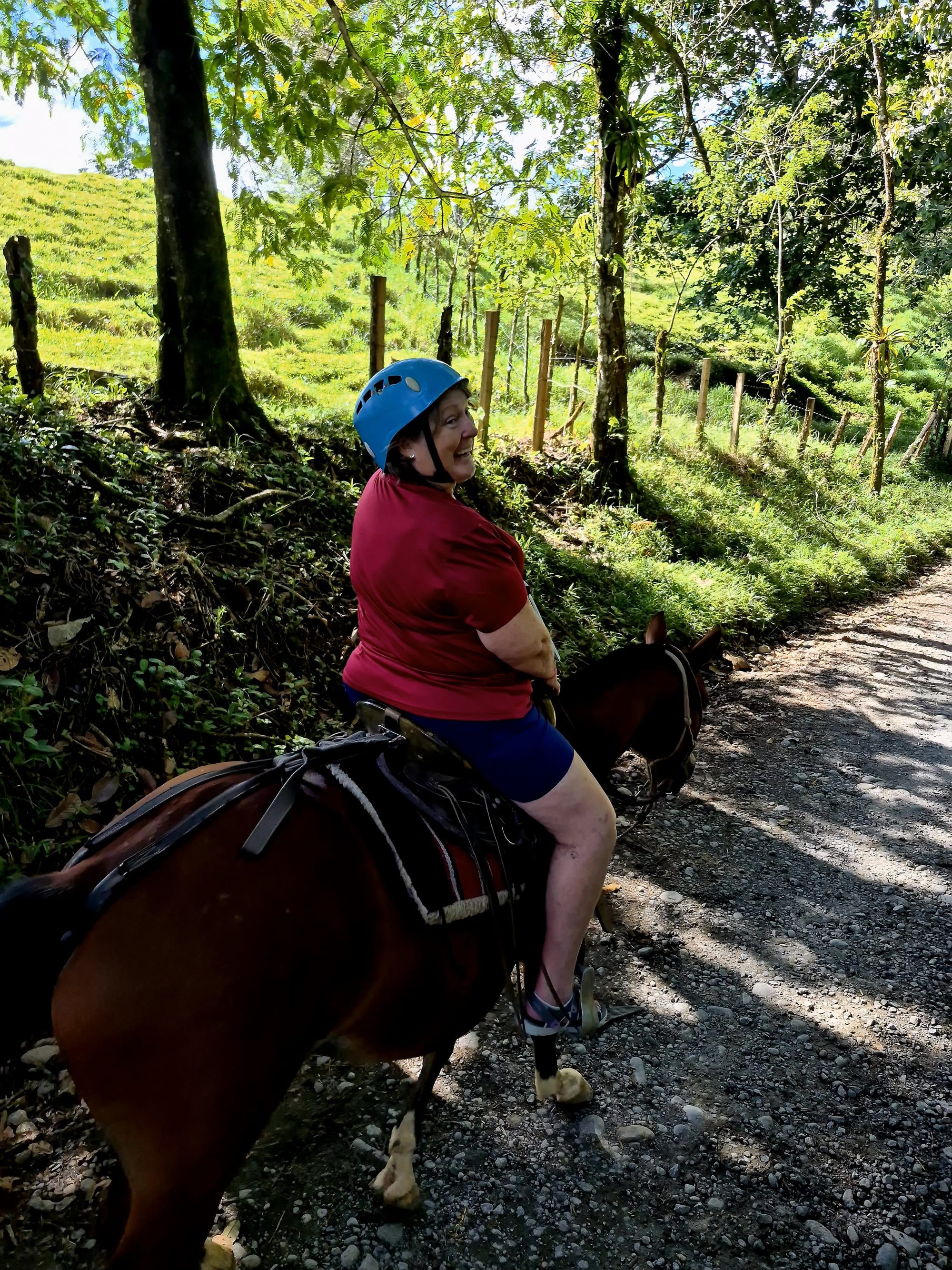
Day 12 began with a horseback ride to La Fortuna Waterfall. We were the only two guests, accompanied by three guides, including two trainees. Our horses, Lillie and Sampson, had distinct personalities — Lillie, in particular, made it clear she wanted to be in charge, pinning her ears back and snapping at any horse that moved ahead of her. For Colleen, the ride itself was a highlight.
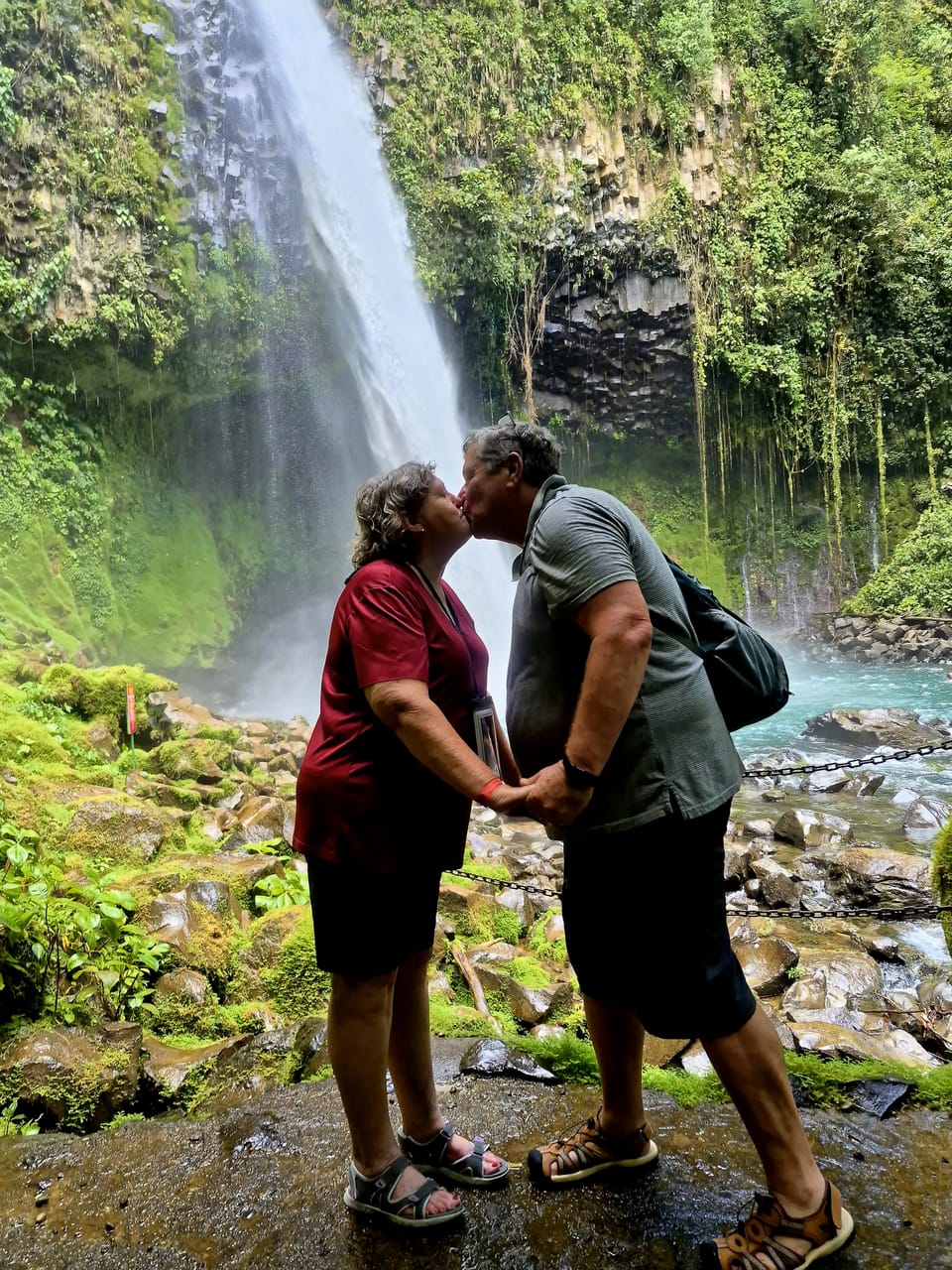
The walk down to the waterfall involves 500 steep steps. The view at the bottom is exactly as advertised — dramatic, powerful, and mist-filled. We were soaked just standing there. We chose not to continue to the swimming area. The rocks looked slippery and unforgiving, and it felt like a sensible call.

The climb back up is where reality hits. The steps are deep and relentless, and in the heat and humidity they sap energy quickly. We went slowly, but it proved too much for Colleen. At the top, we spotted a large golden silk orb-weaver (banana spider), while zipliners screamed overhead — adding to the atmosphere.
On the ride back, Colleen began to feel faint and worried about falling from the horse. She chose to walk instead of riding. The lead guide, Kevin, radioed for assistance, and she was transported safely back to base. The staff handled everything professionally, offering food, drink, and reassurance. Back at the lodge, Colleen rested and rehydrated and recovered fully.
It was an important reminder: La Fortuna Waterfall is not an easy outing. For the unfit, elderly, or anyone struggling with heat and humidity, it can be genuinely taxing. Still, she got to see one of Costa Rica’s most iconic sights — and that mattered.
These two days summed up Costa Rica perfectly: rich wildlife and local traditions, outstanding natural beauty but real physical demands that shouldn’t be underestimated. Not everything went smoothly — and that’s exactly why these details are worth sharing.
If you’re planning a trip, I keep the booking tools I actually use at https://www.traveladventurescurated.com/about/
Disclosure
This site contains affiliate links. If you book through them, I may earn a commission at no extra cost to you. Thanks for supporting the site.