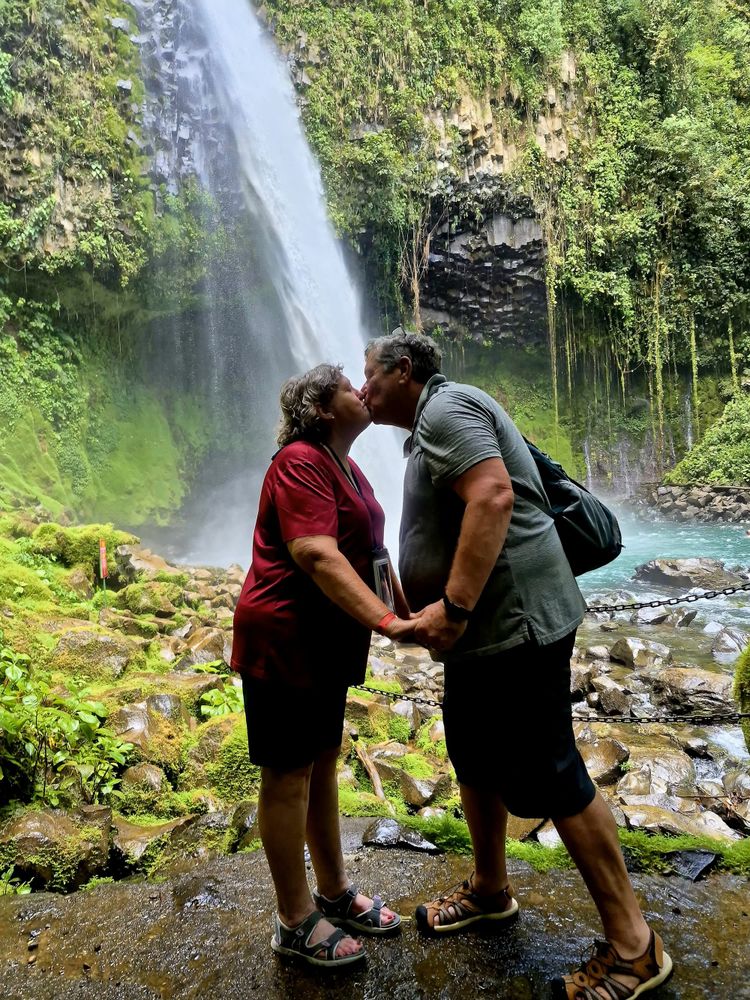
Costa Rica Day 19: Monteverde Reality — Crowds, Cloud Forest Fatigue, and a Night Tour That Redeemed the Day
If you’re planning a trip, I keep the booking tools I actually use at https://www.traveladventurescurated.com/about/
Monteverde was one of the destinations I was most curious about before this trip. Cooler air, cloud forest, hanging bridges, wildlife, and that sense of being suspended above the forest canopy. What we actually experienced was a mixed bag — moments of genuine wonder offset by crowds, fatigue, and one accommodation I wouldn’t recommend to anyone.
And yet, when Monteverde delivered, it delivered in a way that reminded me exactly why this place still matters.
Don Taco Hotel: A Rare Miss on This Trip
Up until now, we’d been fortunate with accommodation. Every lodge and hotel had been unique, comfortable, and well located in nature. Some were better than others, but all were acceptable.
Don Taco Hotel was the clear exception.
The room was tiny and awkwardly laid out. I literally bumped my head on the shower door while sitting on the toilet. There was no hot water at the basin, so shaving meant leaning into the shower. Towels had seen better days, there was no chair in the room, and used toilet paper went into an open bin — something that never gets easier, especially when the bin isn’t covered.
Noise was relentless. Wind and traffic carried straight through the building, to the point where earplugs are offered at check-in. The bed was hard and uncomfortable and being perched at the top of a steep hill meant any walk into town was followed by a punishing climb back up.
I wouldn’t recommend this hotel to anyone.
Ziplining at Selvatura Reserve: Big, Busy, and Impersonal
The day began with ziplining at Selvatura Reserve, a park clearly designed to handle volume.
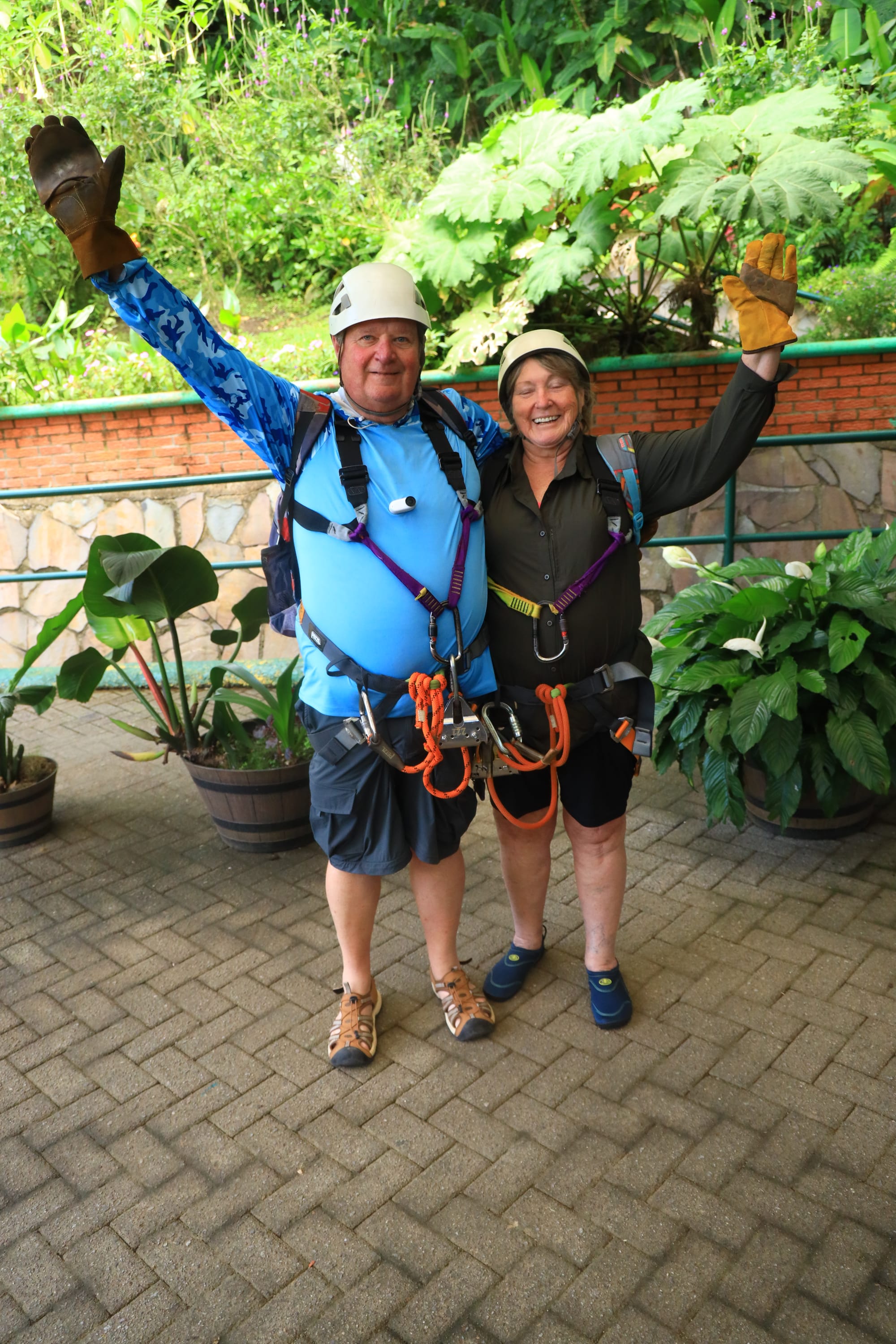
Our group numbered around 50 people, and everything felt rushed from the start. The operation was efficient, but impersonal. We opted for one Superman-style zipline for an extra fee, which turned out to be the highlight of the experience — fast, exhilarating, and genuinely fun.
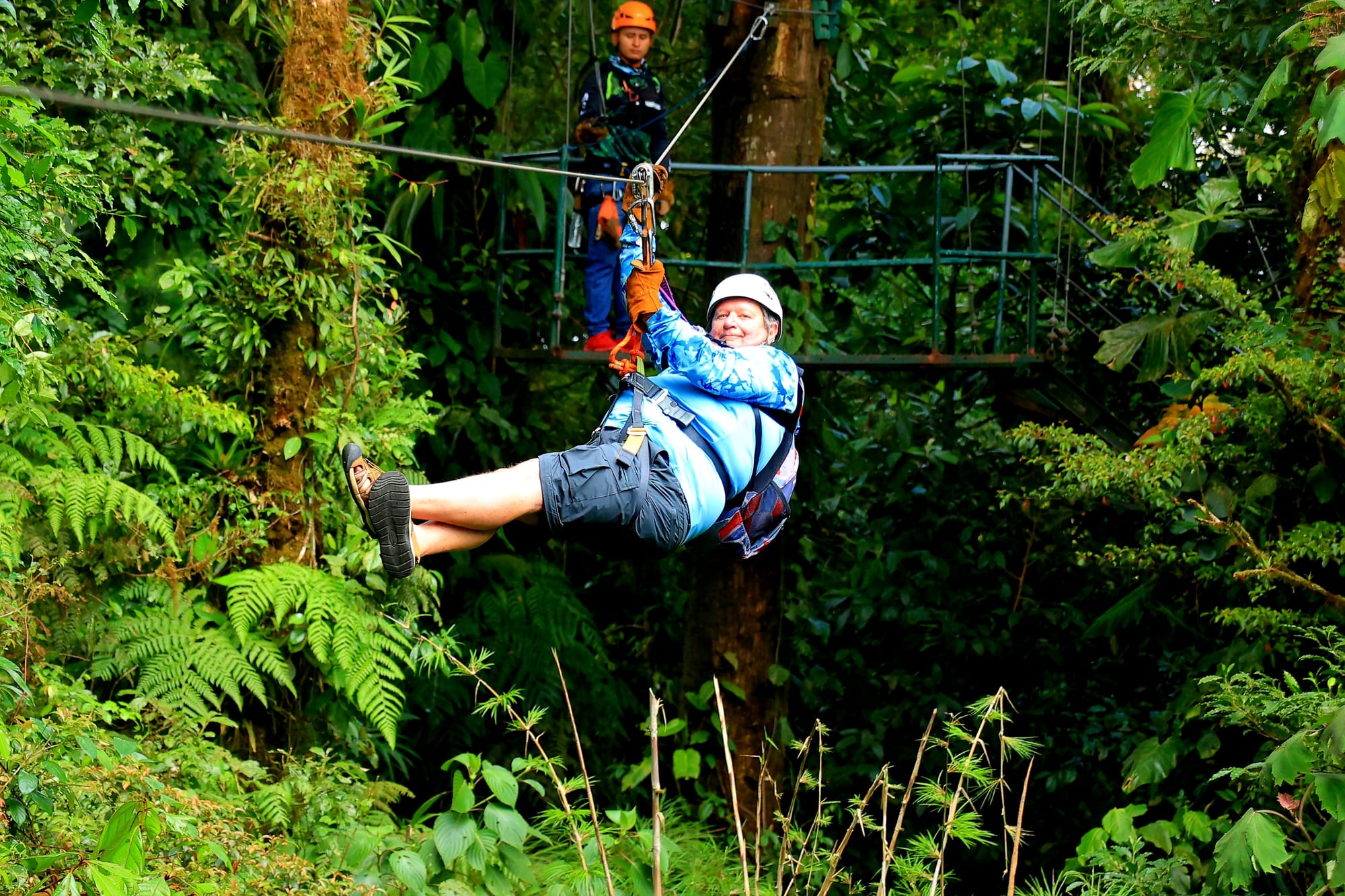
The rest of the ziplines were repetitive. Aside from length, there was little variation. The climbs between platforms were long, steep, and physically demanding — not suitable for the elderly or unfit. Colleen was required to buy water shoes on the spot because open sandals weren’t allowed.
There was also an optional Tarzan swing with a 200-pound weight limit, which excluded me. Colleen decided to skip it as well.
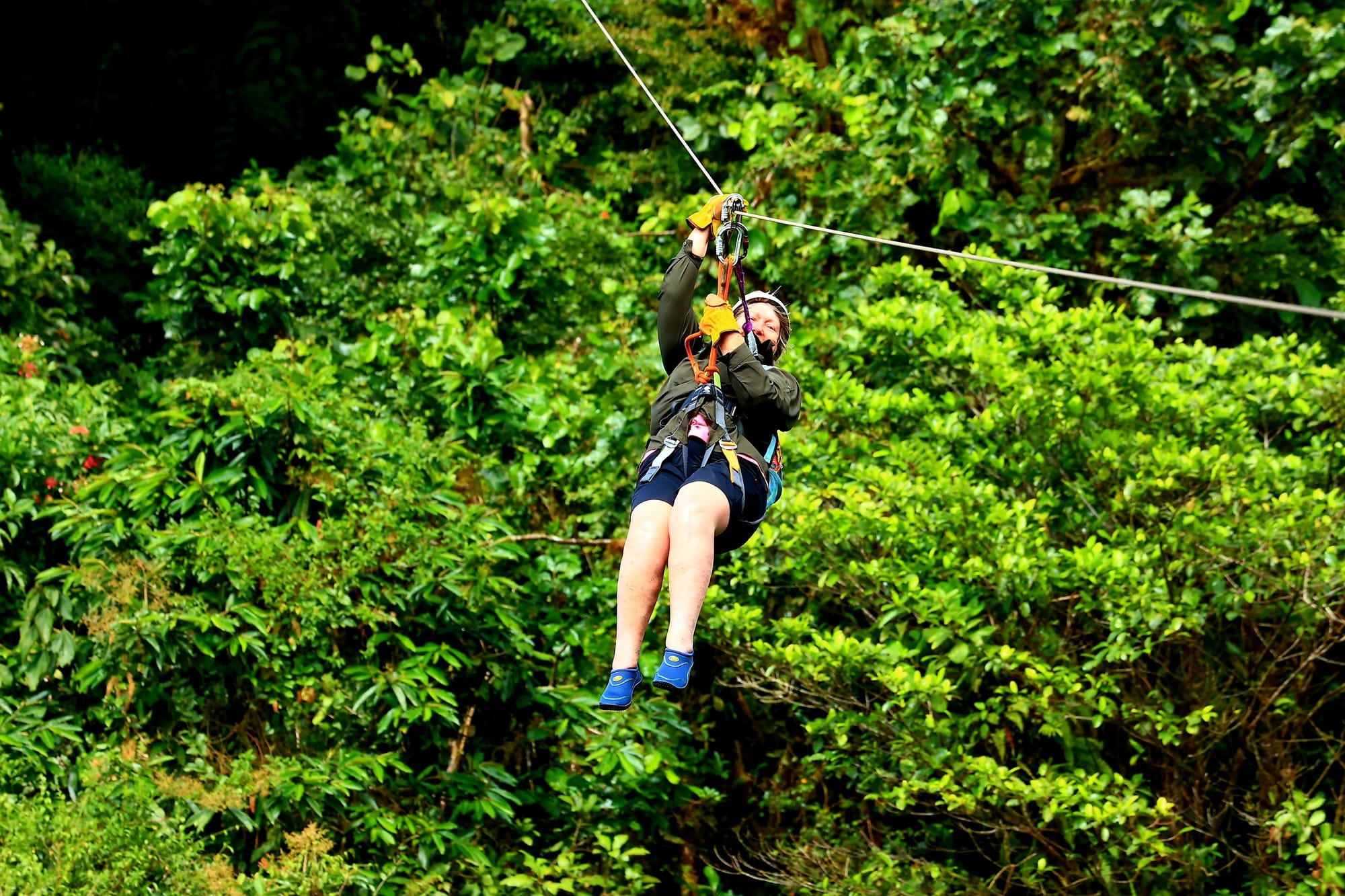
The Superman line made the effort worthwhile, but overall the experience felt more like a production line than an adventure.
Hanging Bridges: Beautiful but Monotonous
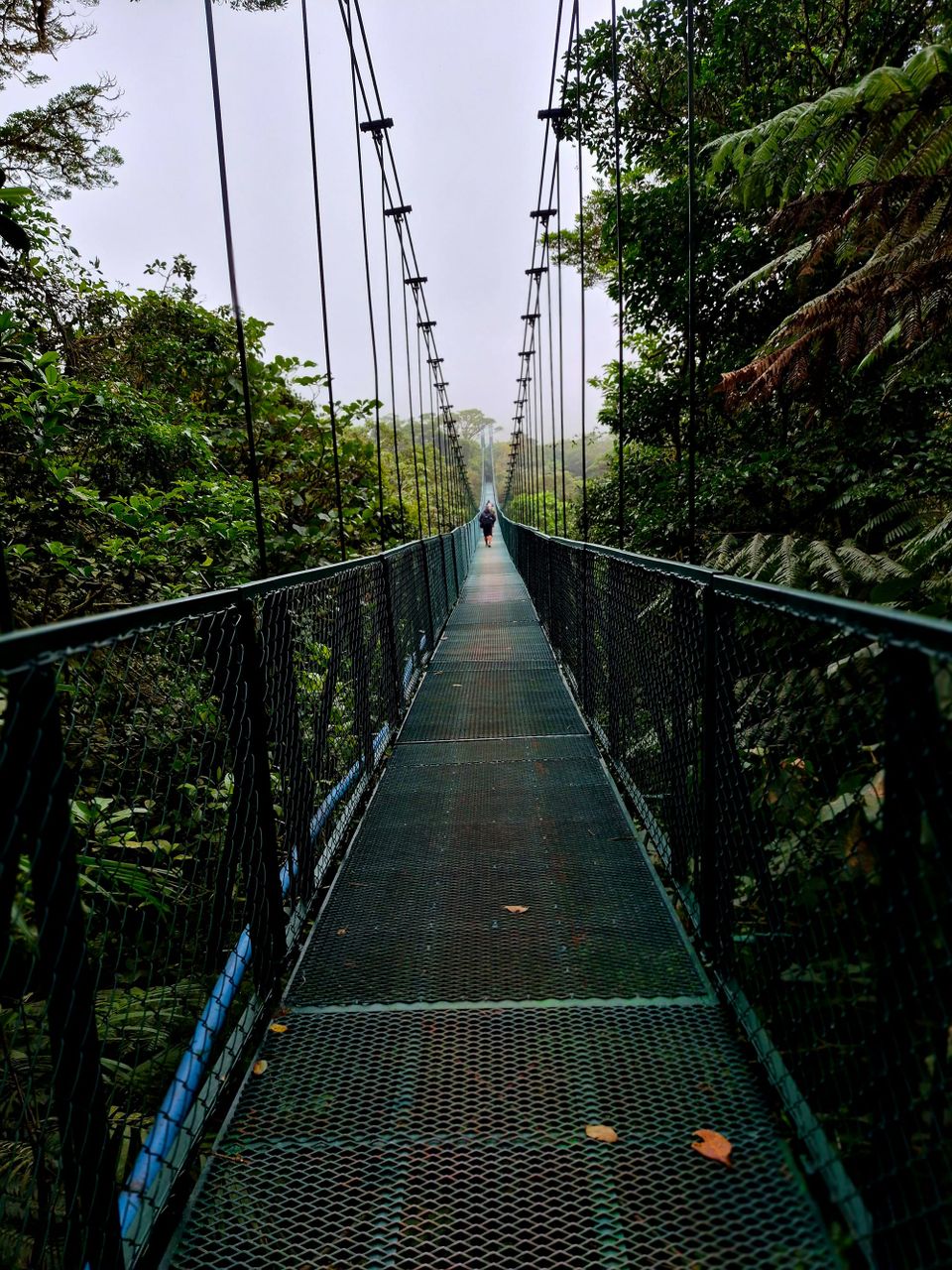
Next came the hanging bridges — another long walk that, frankly, didn’t justify the effort. We spotted a coati, raccoon-like in appearance with no prehensile tail, moving quietly through the trees.
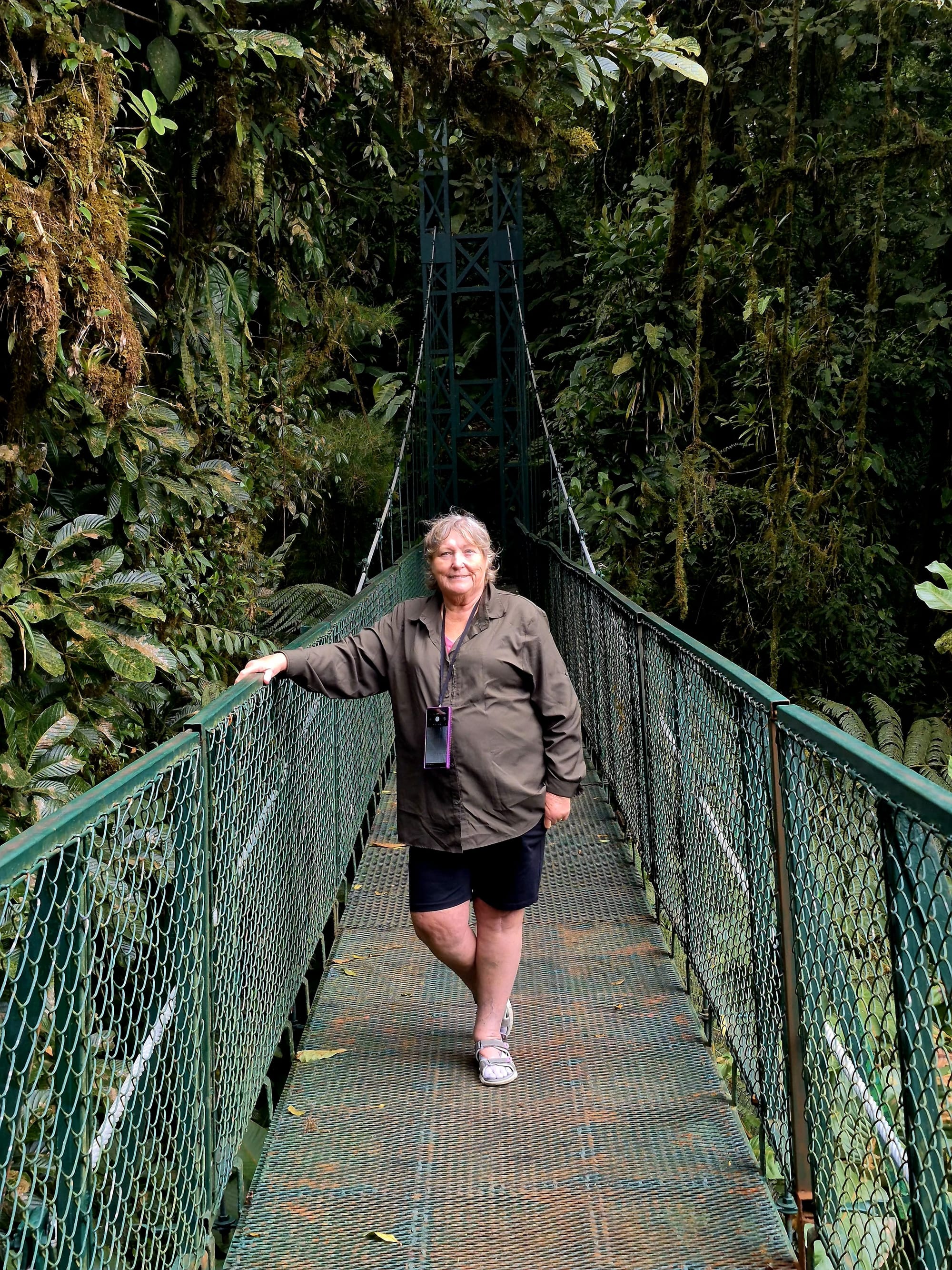
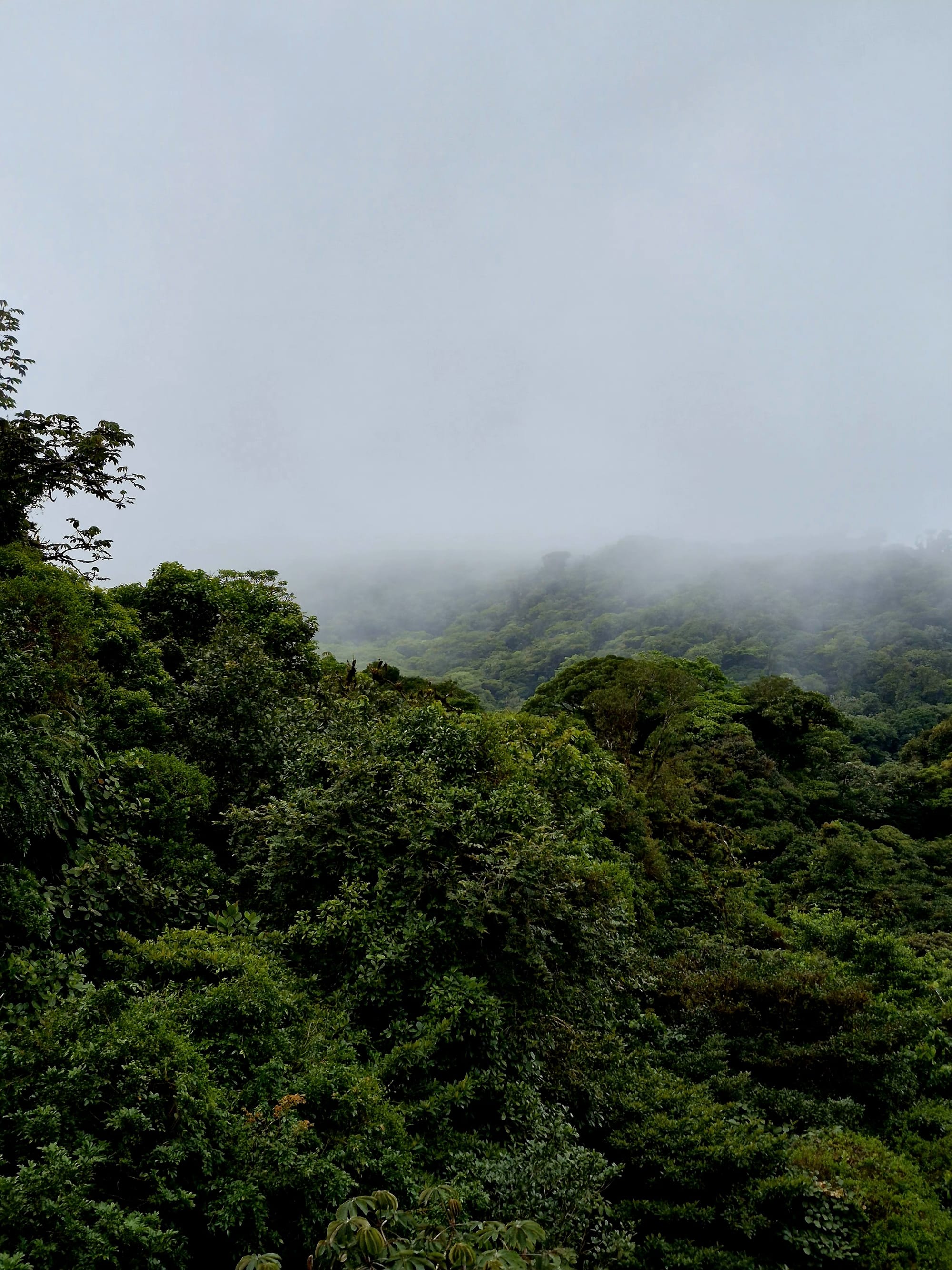
The forest was beautiful, without question. Moss-draped branches, filtered light, and that cool, damp stillness unique to cloud forests. But after the novelty faded, the walk became monotonous. A lot of effort for very little reward.
Gustavo: The Unexpected Highlight of Don Taco
Back at the hotel, the day was rescued — quite literally — by Gustavo.
His bar and restaurant, attached to Don Taco, turned out to be excellent. The food was genuinely good, far better than expected given the accommodation itself, and prepared with care rather than speed. Happy hour somehow stretched all the way to 10 p.m., just for us, and Gustavo kept the drinks coming with warmth, humor, and genuine hospitality. If there’s one reason to stop at Don Taco at all, it’s Gustavo — his food, his cocktails, and the way he made us feel welcome when the hotel itself didn’t.
The Night Tour: Monteverde at Its Best
The night tour was the turning point — and without question, the highlight of Day 19.
Our small group of six felt just right. Antonio, our guide, was calm, observant, and deeply knowledgeable. He carried a night scope that allowed us to see details invisible to the naked eye and even captured photos through the scope to share afterward. The forest came alive.
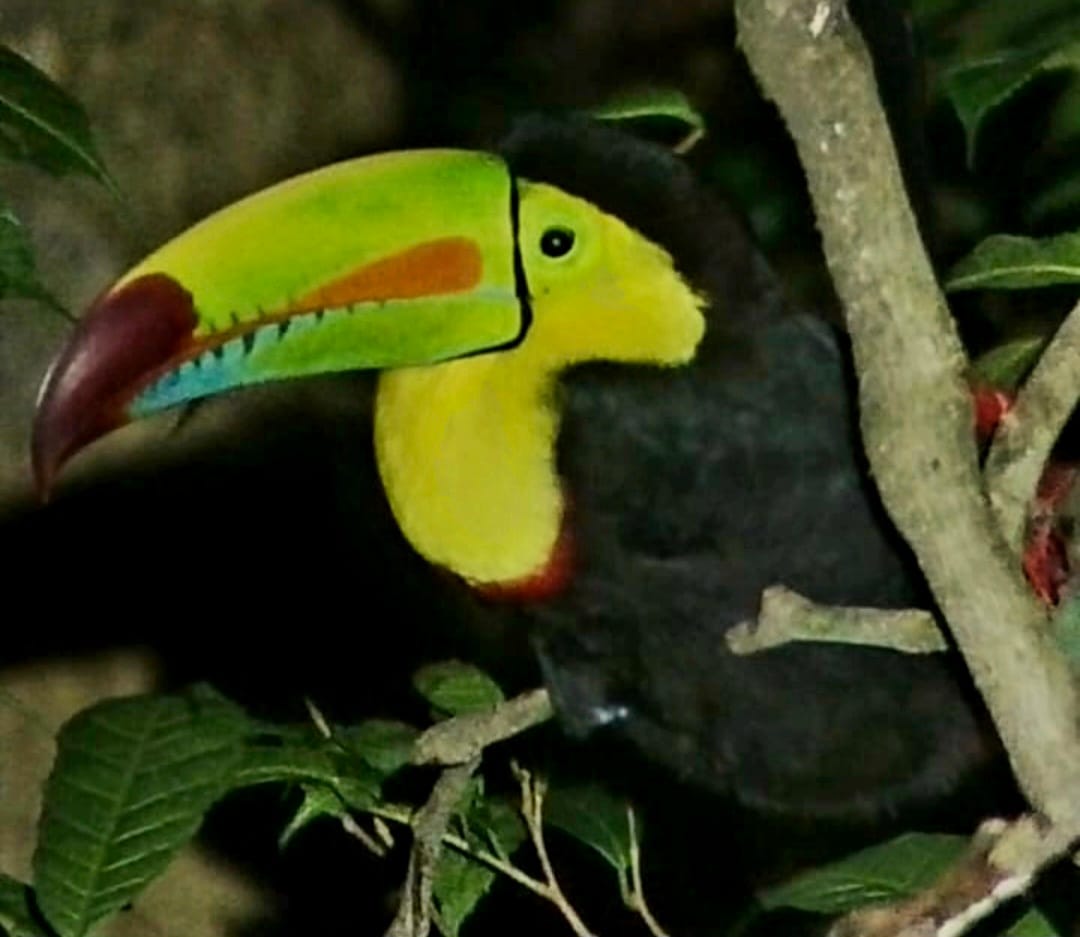
We watched a sloth feeding high in the canopy, slowly tearing leaves with that unmistakable, unhurried rhythm only sloths possess. Seeing it illuminated through the scope felt like peeking into a hidden world.
We found two frog species, exquisitely camouflaged against wet leaves and moss. Subtle, beautiful, and easy to miss without a trained eye.
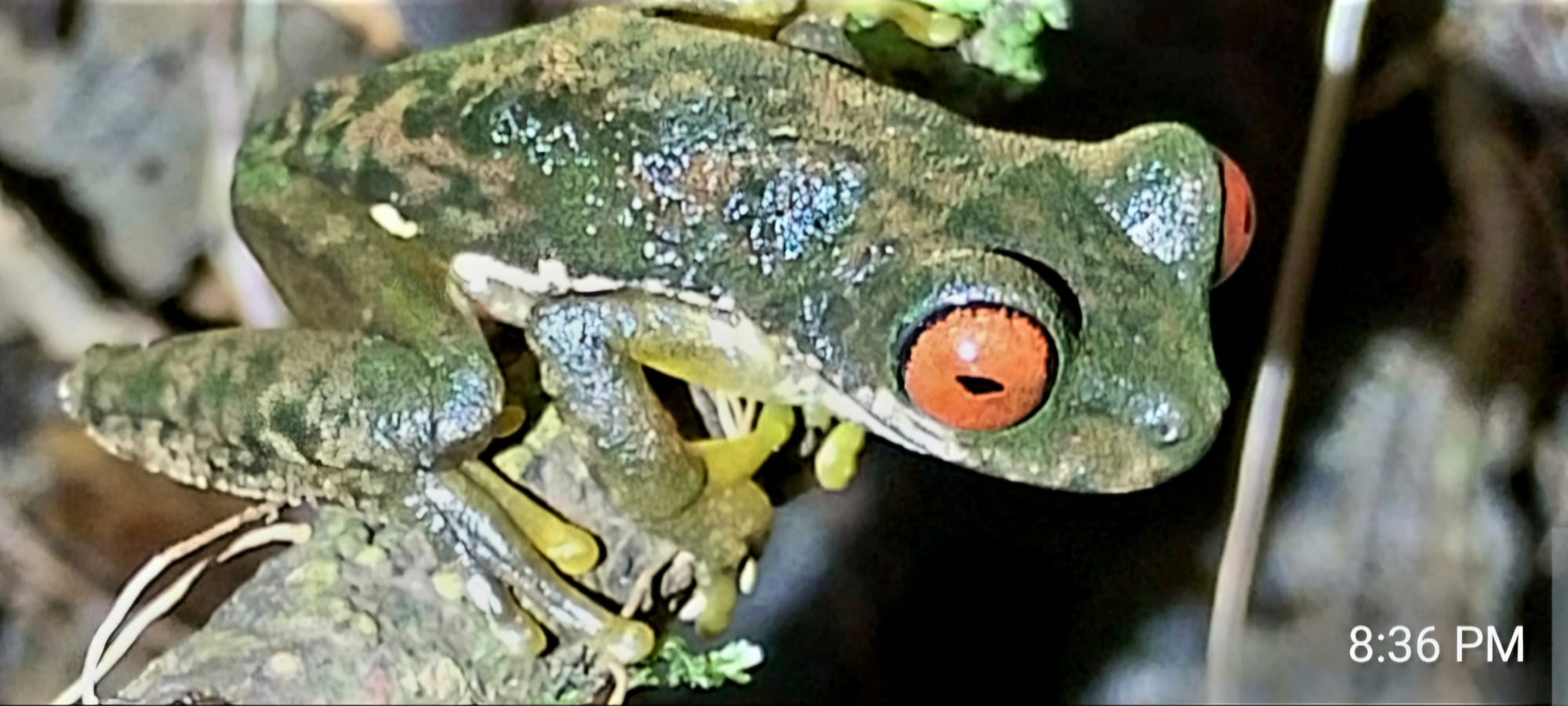
Antonio then located two vipers, coiled motionless among bromeliads. Perfectly still. Perfectly adapted. Their scales caught the faint red-filtered light just enough to reveal their presence.
A huge stick insect crawled along a branch like a moving twig — camouflage taken to an absurd level of perfection.
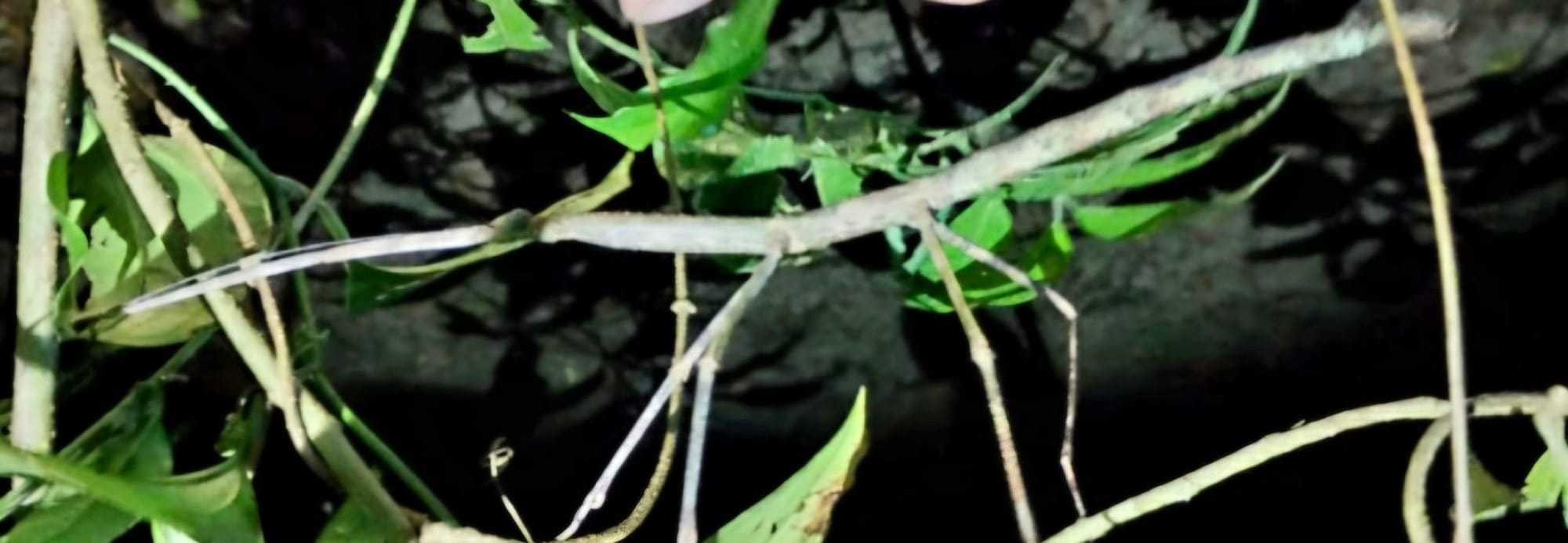
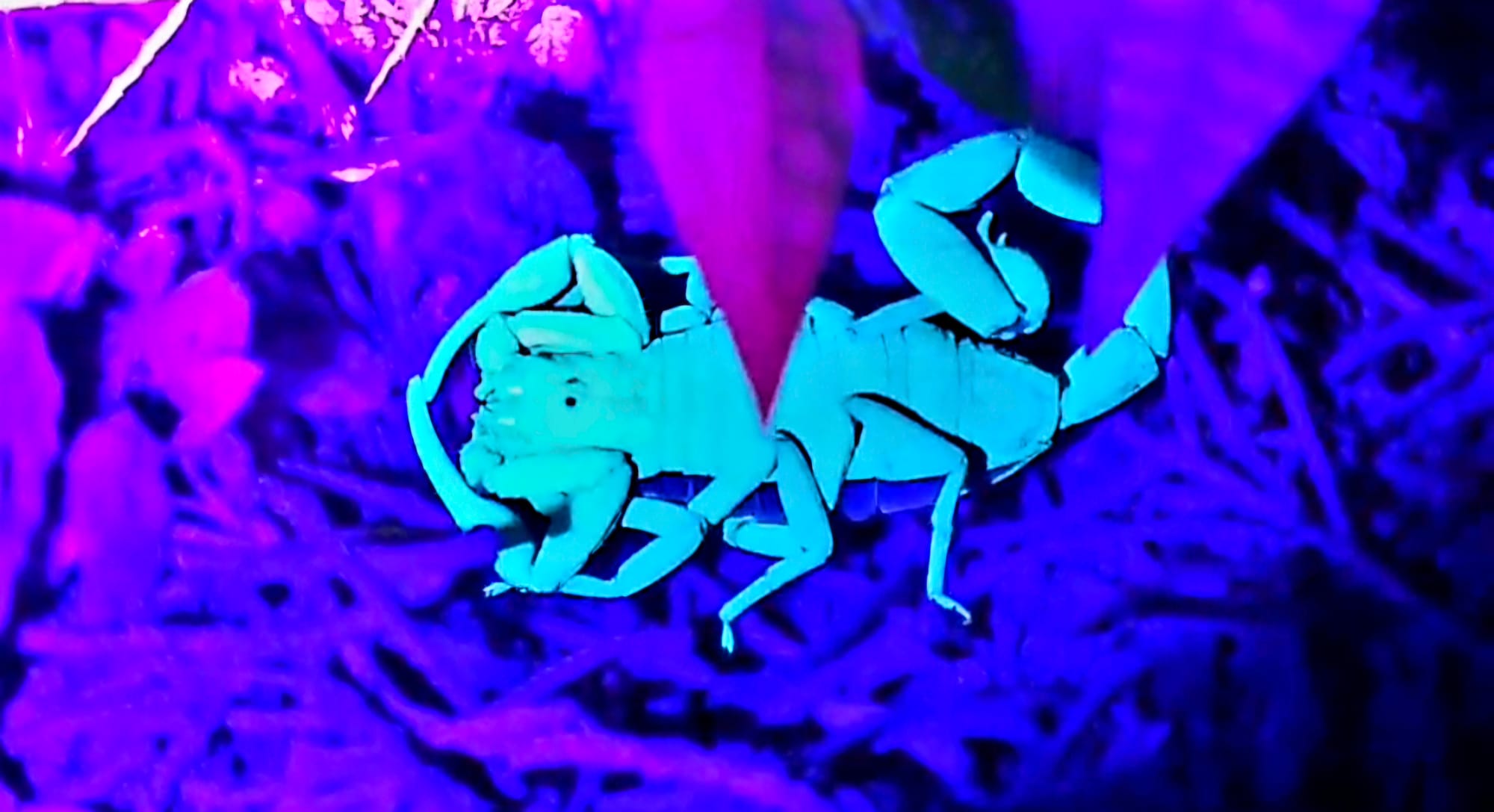
The grand finale: a scorpion glowing electric blue green under UV light. Watching it fluoresce in the darkness felt surreal — like wildlife from another planet.
The Yawning Viper: A Rare Natural Moment
One of the most intriguing moments of the night was observing a viper with its mouth fully open — what initially looked like a yawn. This behavior is real and documented. Snakes will gape or “yawn” to realign their jaws after feeding, adjust ligaments, or reset sensory structures. It is not aggression, not a threat display, and not stress-related. Seeing this behavior in the wild is uncommon and fleeting — one of those accidental, intimate moments.
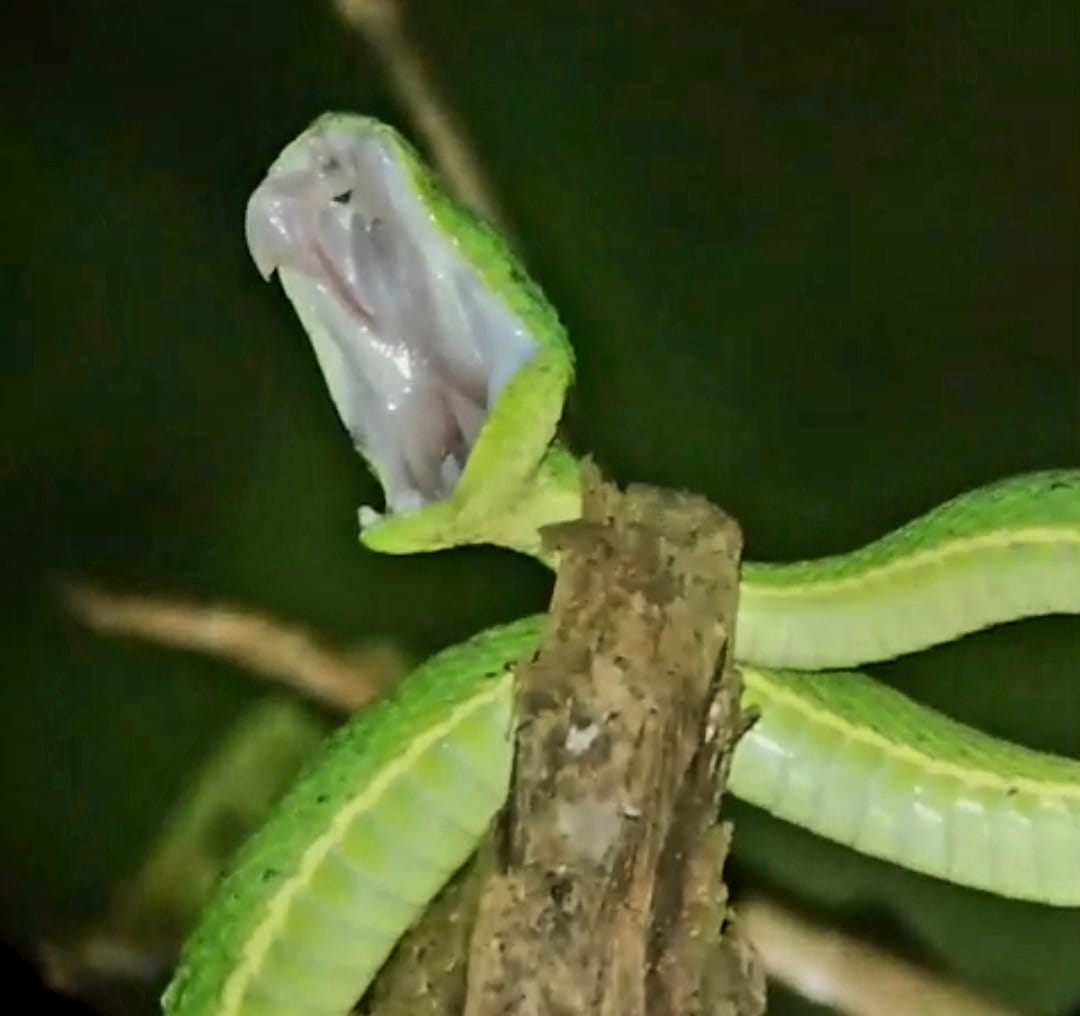
The snake was identified as a Side-Striped Palm-Pit viper (Bothriechis lateralis), a venomous but generally calm cloud-forest species when undisturbed.
Leaf-Cutter Ants: The Farmers of the Forest
Antonio also took time to explain the astonishing organization of leaf-cutter ants, often called “farmer ants.”
A single colony contains multiple specialized castes:
- The queen, responsible solely for reproduction
- Workers, who cut and transport leaf fragments
- Gardeners, who tend the fungus the colony feeds on
- Soldiers, who defend trails and nest entrances
- Nurse and Maintenance ants, care for eggs larvae and pupae and inspect the incoming leaves for disease

The ants don’t eat the leaves themselves. Instead, they use them to cultivate a specific fungus, effectively running an underground agricultural system. Watching their perfectly organized traffic lines made it clear why leafcutters are considered one of nature’s most advanced non-human societies.
Day 19: Final Reflection
Monteverde tested our patience.
Crowds, physical fatigue, and disappointing accommodation weighed heavily. But when night fell and the forest woke up, everything changed.
The cloud forest after dark reminded me why places like this still matter — because when conditions are right and the noise fades away, the forest reveals a world most people never truly see.
If you’re planning a trip, I keep the booking tools I actually use at https://www.traveladventurescurated.com/about/
Disclosure
This site contains affiliate links. If you book through them, I may earn a commission at no extra cost to you. Thanks for supporting the site.