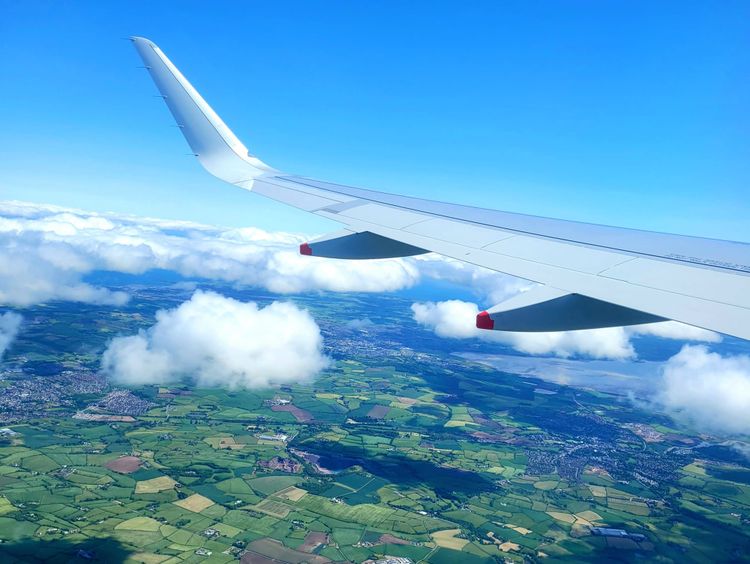
Alaska in Winter: Rail, Dog Sledding and the Northern Lights from Anchorage to Fairbanks
If you’re planning a trip, I keep the booking tools I actually use at https://www.traveladventurescurated.com/about/
February in Alaska is tough - freezing temperatures, strong winds, deep snow and dangerous road conditions. It is working winter and conditions do not deter people from going about their daily activities. Long dark nights beneath the auroral oval make this prime Northern Lights season.
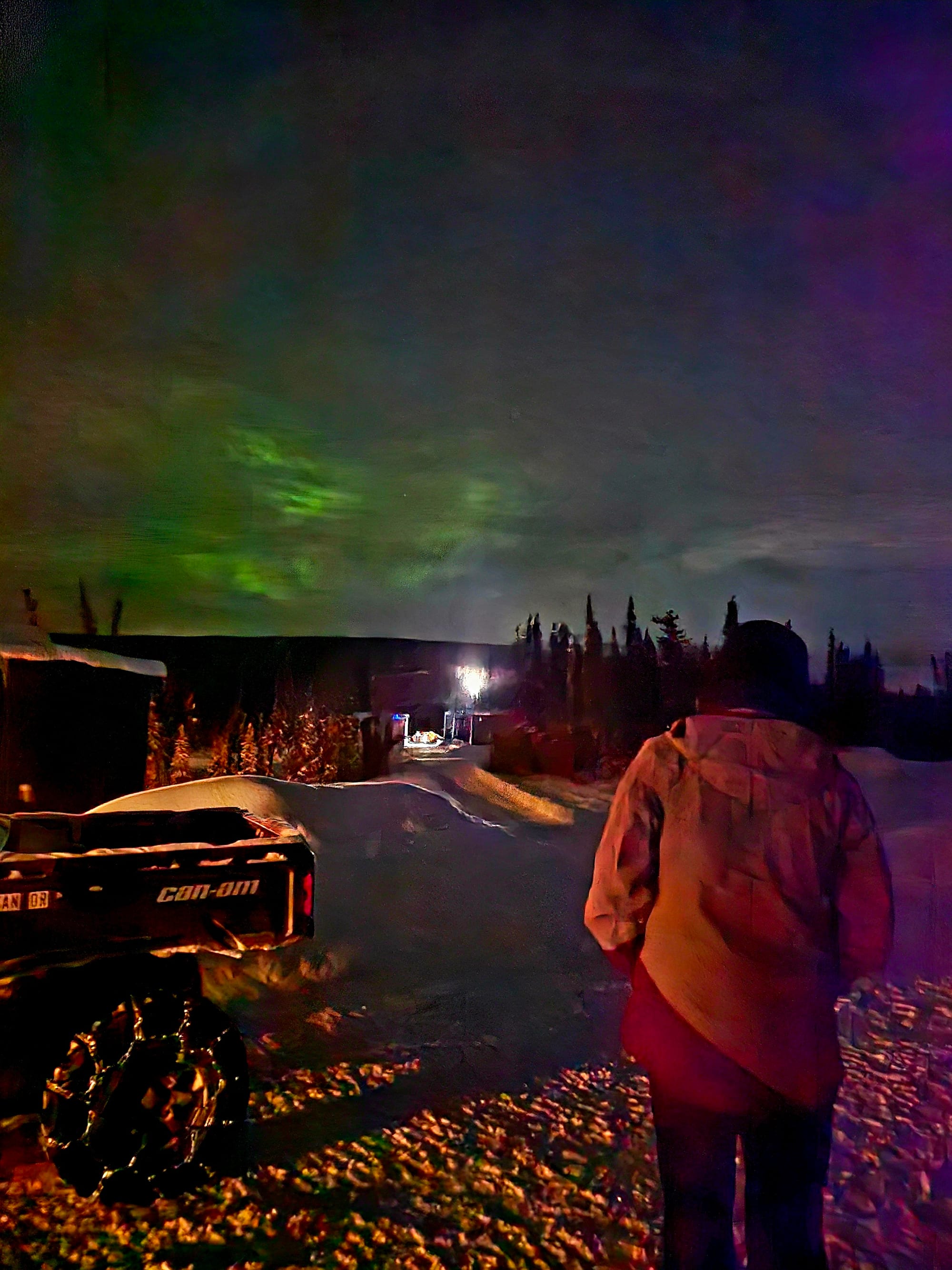
This journey followed the Northern Lights Getaway with Salmon Berry Tours, moving from Anchorage to Talkeetna and north to Fairbanks. Harrison was our guide. He is a history buff and explained so much of Alaskan history in a very engaging manner. His depth of knowledge was impressive. Harrison saw to our group of nine people's every need and produced detailed lists of what we needed to bring, what was planned for the day and what to wear according to the activity and weather conditions. He handled the appalling road conditions like a pro and proved to be an all-round great guide and person. A telling moment was at the end of the tour when we said our farewells and he said, "I am a hugger".
Anchorage
Stay: Copper Whale Inn
Anchorage may be Alaska’s largest city, but roughly 300 moose live within city limits. In winter, deep snow pushes them into plowed neighborhoods and cleared paths because compacted snow is easier to navigate.
A mature bull can weigh over 1,200 pounds. Cows with calves are especially defensive. Deep snow limits their mobility and increases stress, which makes them unpredictable. In Alaska, moose injure more people annually than bears. Seeing one downtown is normal. Giving it distance is mandatory.
A Gear Rental Pack (parka, insulated boots, snow pants, mohair socks, thermal underwear and mittens) removes packing guesswork and provides an indispensable barrier against the cold. In February, insulation determines how long you can remain outside comfortably.
Turnagain Arm
Activity: Winter Turnagain Turn Tour
The Seward Highway along Turnagain Arm is one of North America’s most dramatic drives. Mountains rise sharply from tidal flats. The tidal swing here is among the largest on the continent.
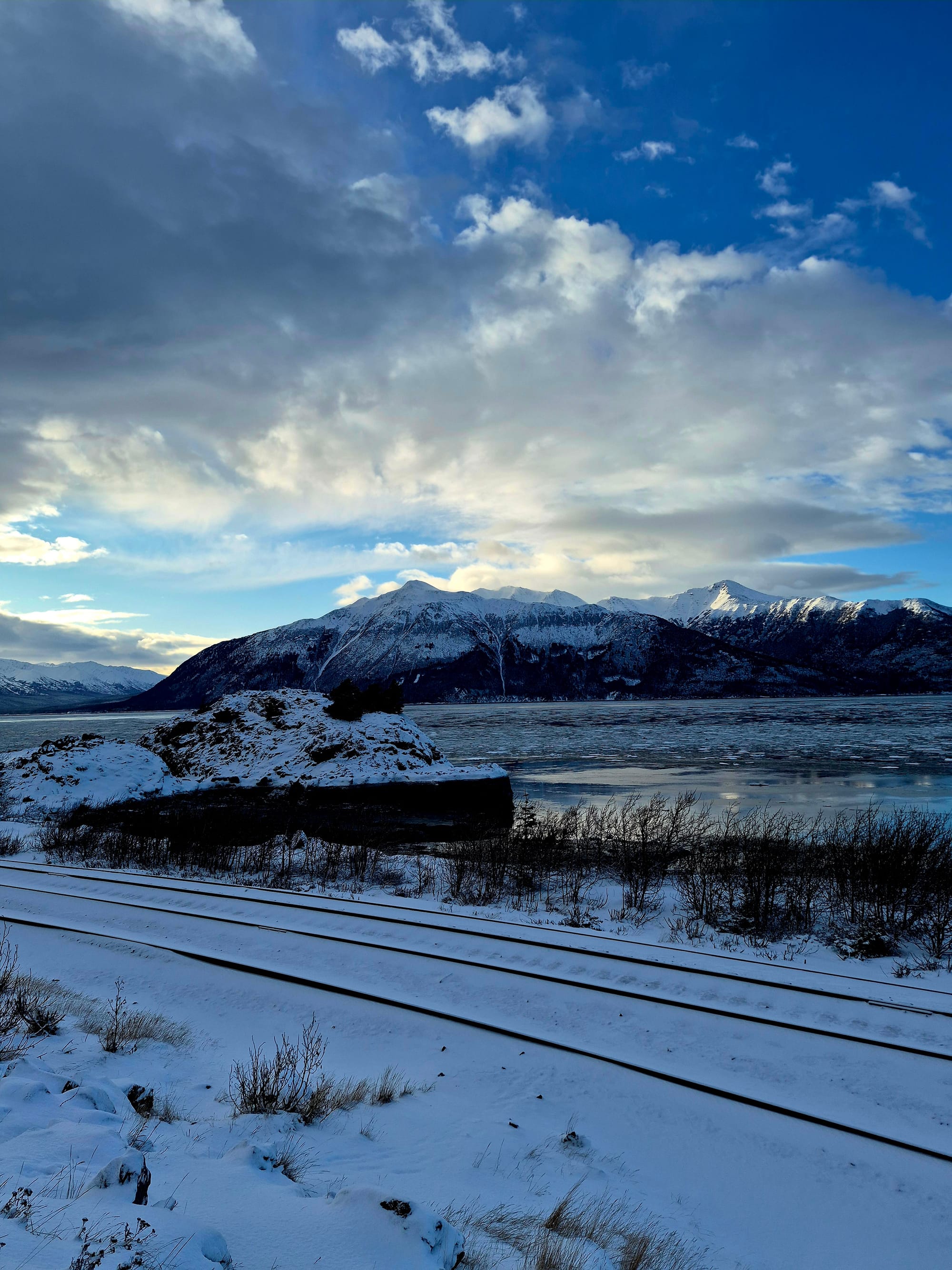
Stops included Mt. Alyeska and the Alaska Wildlife Conservation Center. At the Wildlife Conservation Center, musk ox, wood bison, moose and bears roam expansive natural habitats. The animals here are mainly rescues and would not survive in the wild. The musk ox and wood bison are being used to establish new breeding herds in various parts of the country.
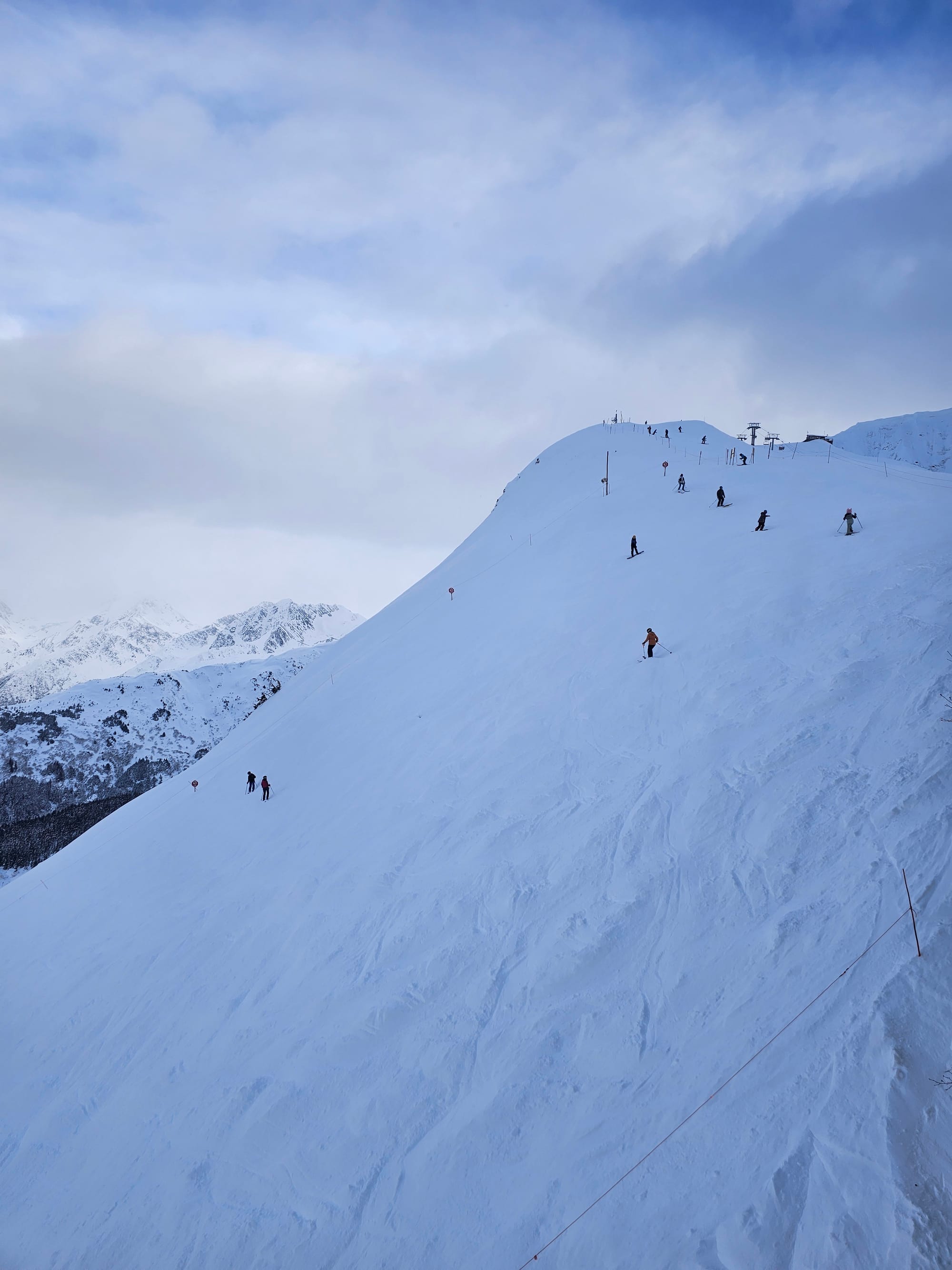
Riding the Alyeska tram was a highlight, and the view was breathtaking as we climbed to the top of Mt. Alyeska and saw the landscape sliding quietly by. Hanging glaciers and snow-defined ridgelines dominated the view. It was a treat to see the skiers, miniature figures far below us. An Irish Alaska helped warm us up during our first day in the snow atop Mt Alyeska.
Talkeetna
Stay: Talkeetna Cabins
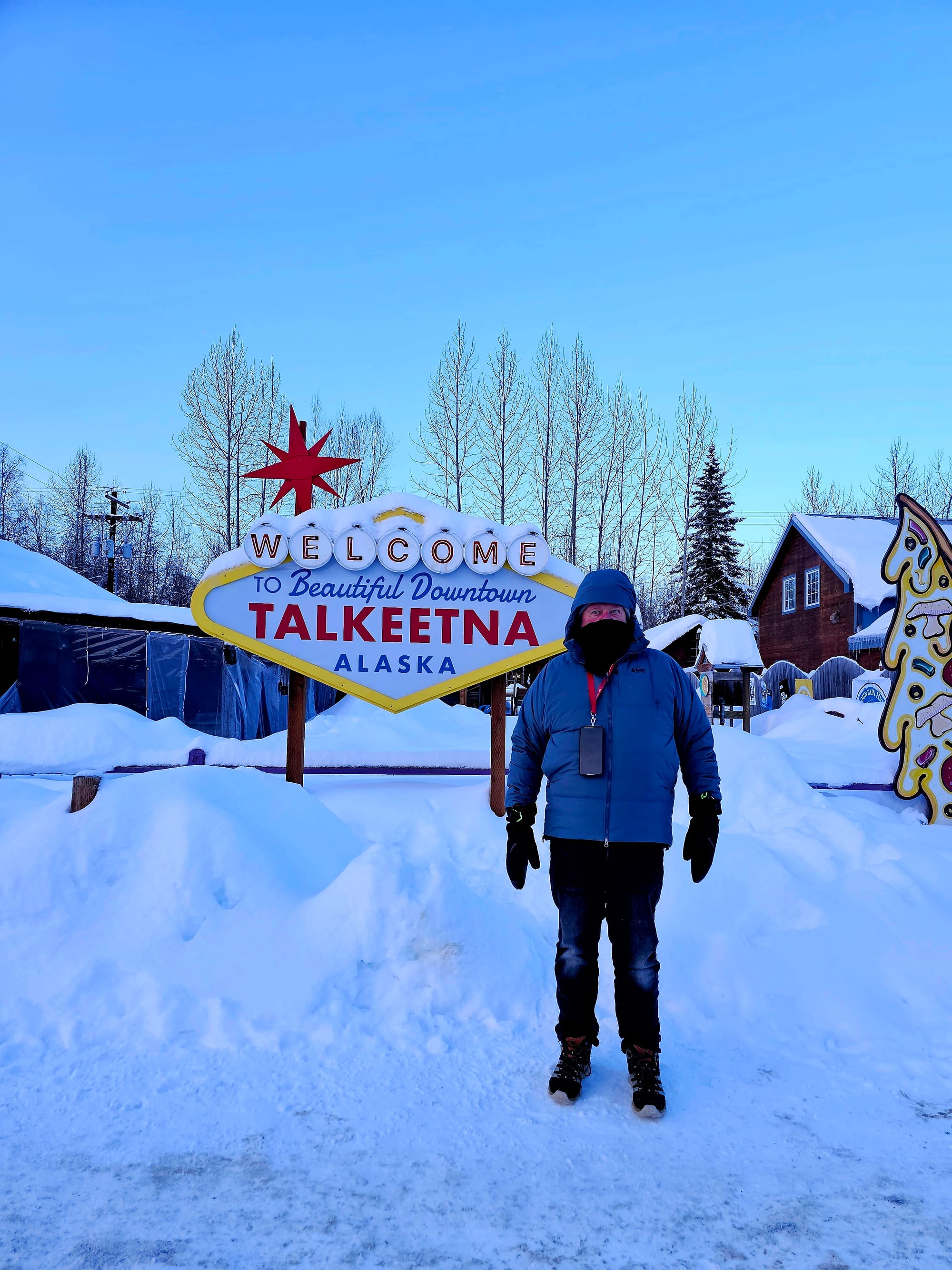
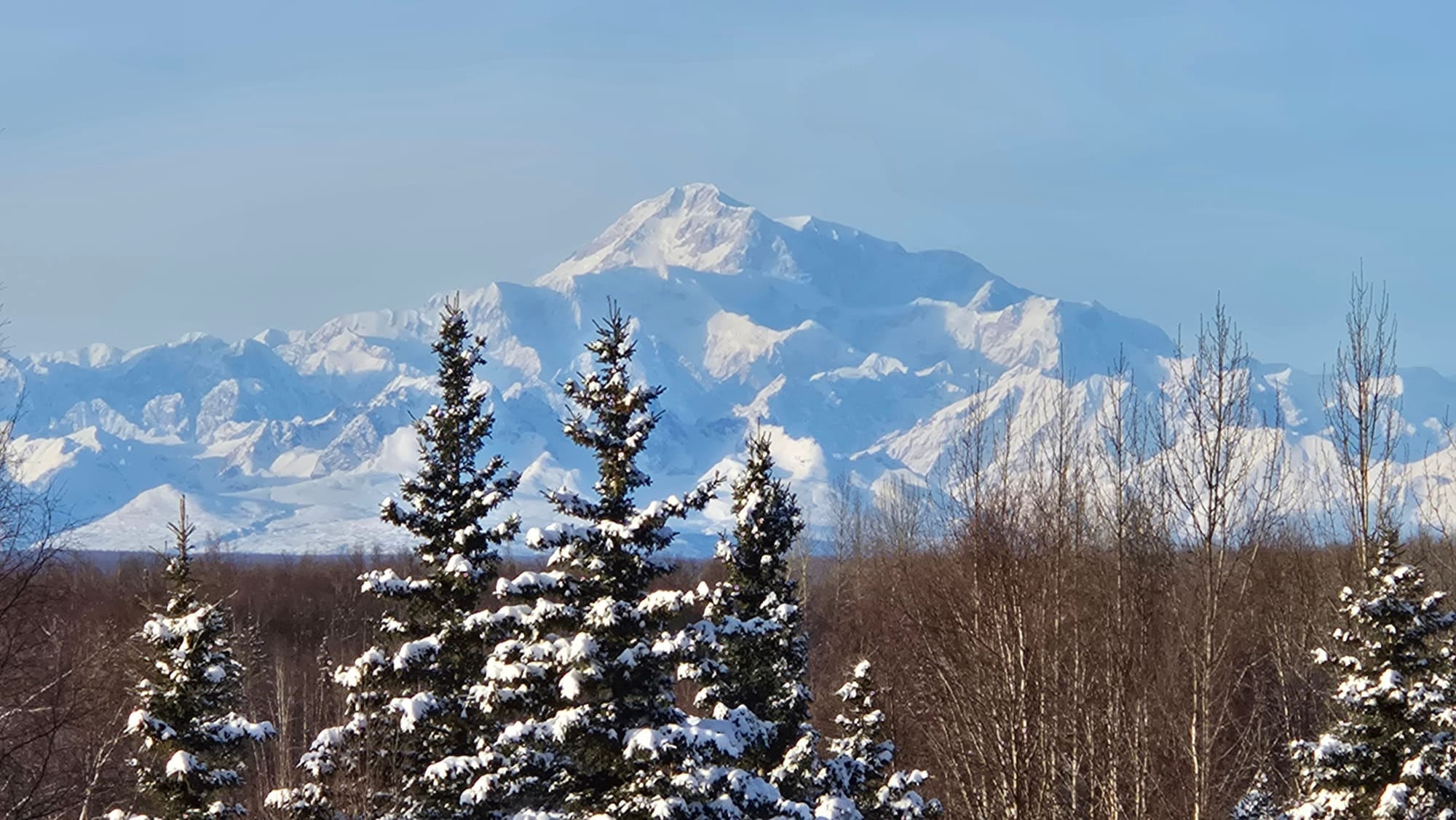
Talkeetna is a historic railroad town and staging point for Denali climbers. Denali is the tallest mountain in North America at 20,310 feet (6,190 m). Rising dramatically from the Alaska Range, its sheer vertical relief and glacier-covered slopes dominate the surrounding wilderness and define the landscape of Denali National Park.
Activity: Winter Dog Sledding at Dallas Seavey Racing
Dog mushing is Alaska’s official state sport. The Iditarod Trail Sled Dog Race began in 1973 to honor the 1925 serum run to Nome, when sled teams delivered life-saving diphtheria antitoxin across nearly 700 miles of wilderness.
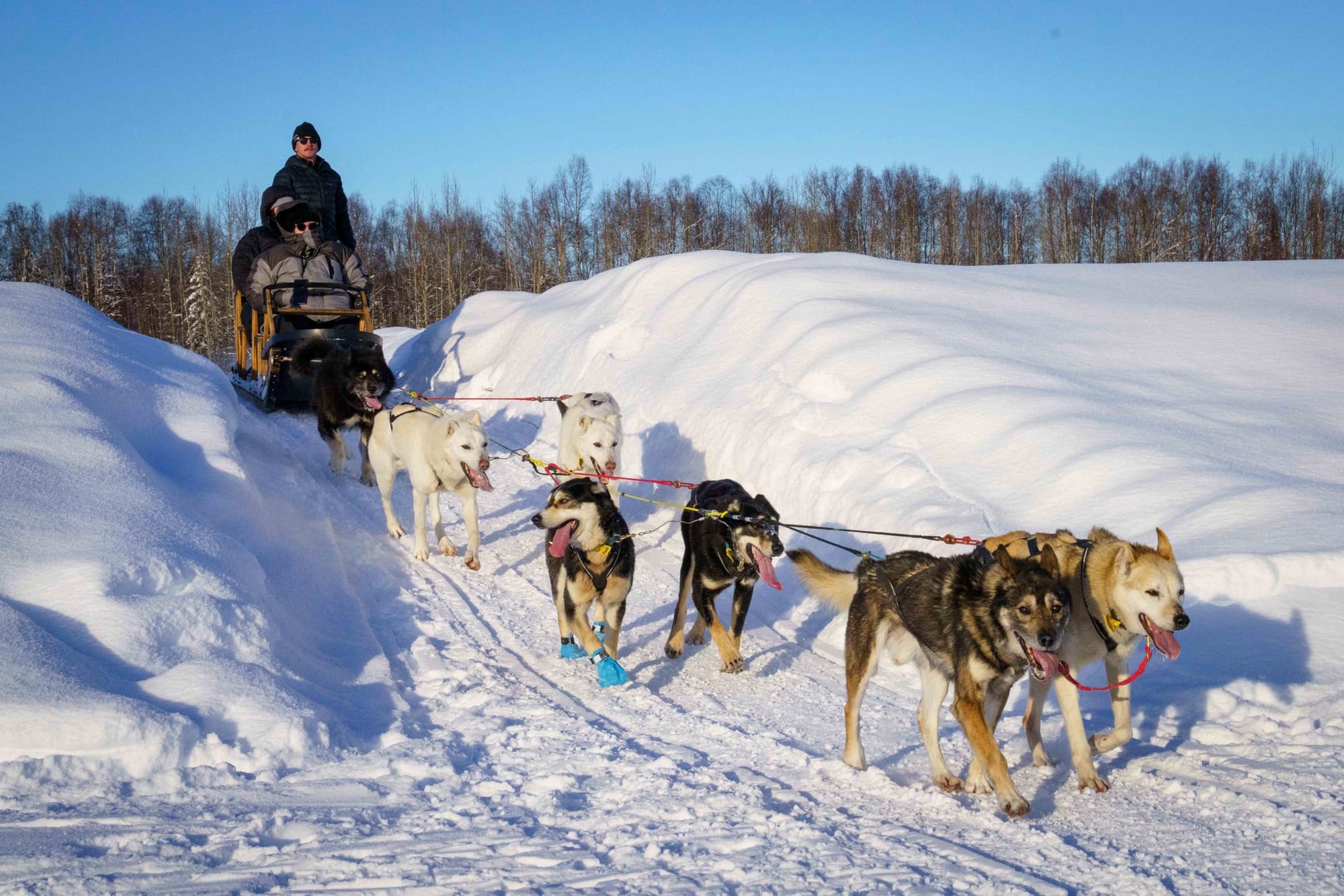
Dallas Seavey is a six-time Iditarod champion. His kennel of 140 working dogs runs active racing teams. The dogs sleep outside in wooden boxes and are bred to tolerate the cold. The dogs are affectionate and we spent some time giving them back scratches and affection. The dogs get so excited hoping they will be selected to pull one of the sleds. The 10-kilometer training run introduces braking technique, balance and pacing while guiding Alaskan huskies through quiet boreal forest. Participants can either drive the sled themselves or be passengers, either way the experience is immersive and exciting - this is the real deal and not a tourist trap.
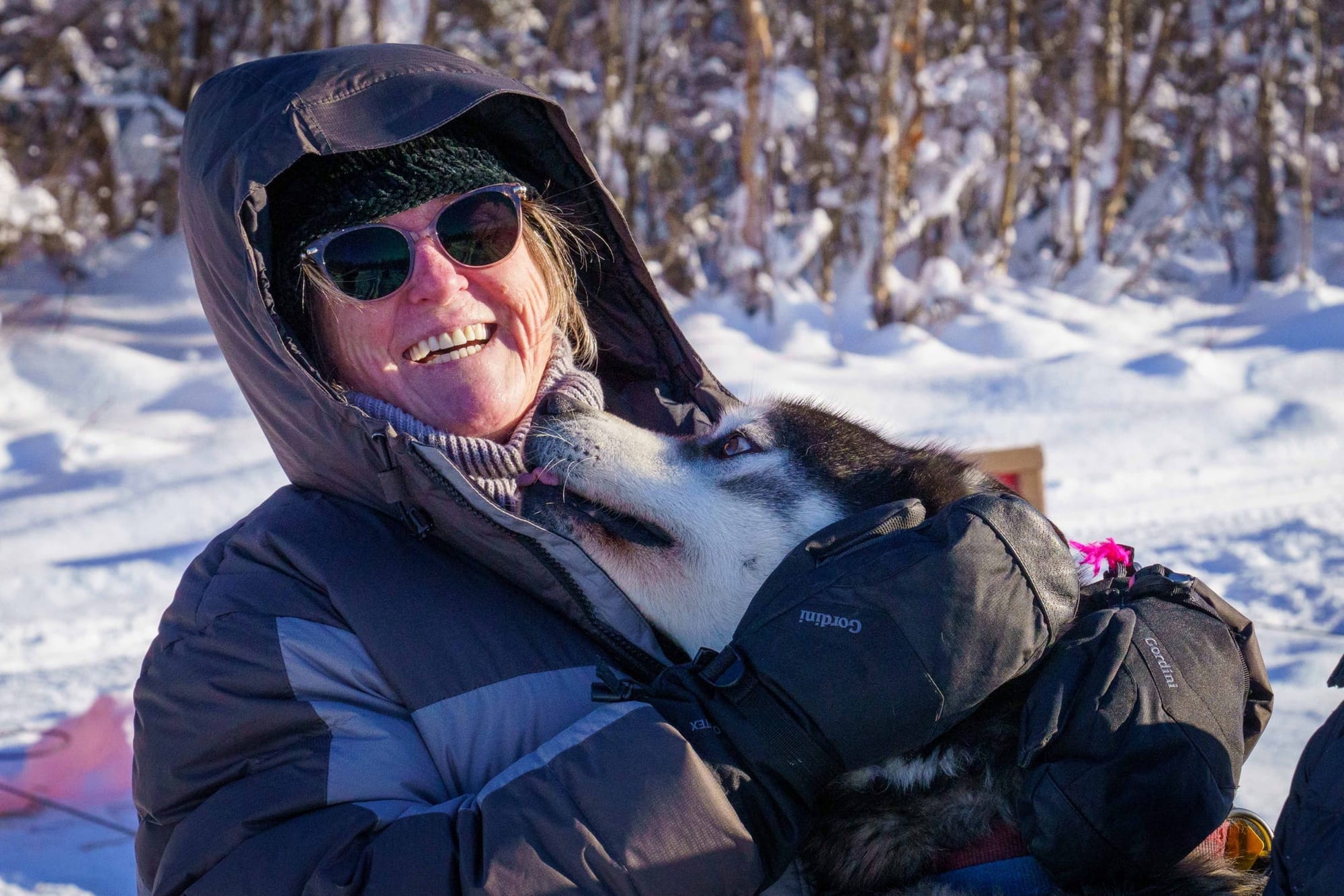
The Iditarod Trail Sled Dog Race is not symbolic heritage. It is competitive endurance sport embedded in modern Alaska.
The Alaska Railroad
Route: Aurora Winter Train / Denali Star– Alaska Railroad
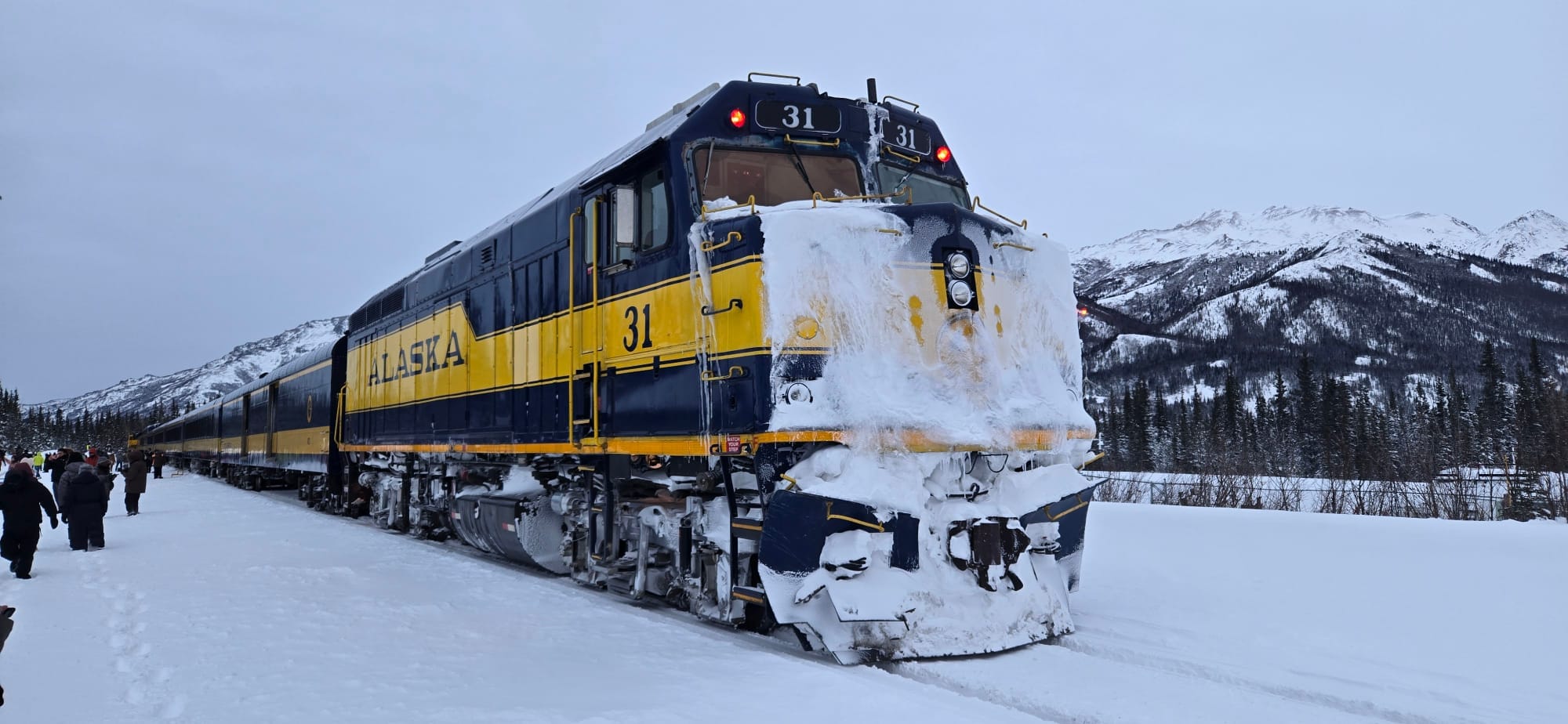
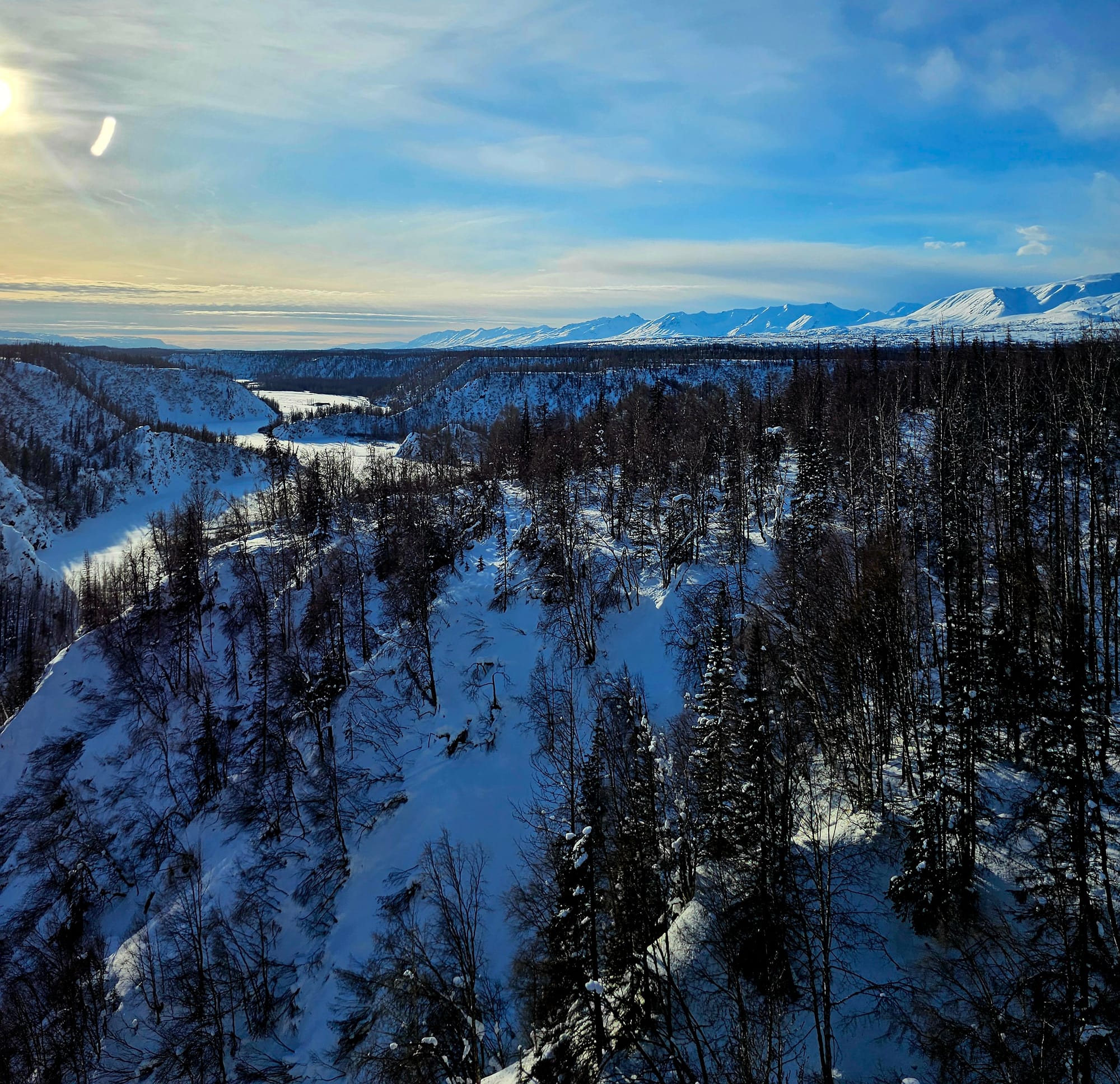
The rail journey from Talkeetna to Fairbanks crosses Hurricane Gulch and leaves coastal mountains behind for the Interior’s open valleys. Frozen rivers, snow corridors and fading daylight define the ride. The ride trip included lunch and dinner which was adequate but proved to be challenging for the kitchen staff as the train lost power at about lunchtime. I found the train ride boring but in retrospect it was safer and more comfortable than the alternative, an 8-hour road trip and provides uninterrupted viewing time.
Fairbanks
Stay: SpringHill Suites by Marriott Fairbanks
World Ice Art Championships
Each winter, Fairbanks hosts the World Ice Art Championships at the Fairbanks Showgrounds, attracting professional carving teams from all over the world.
The multi-block division is the centerpiece. Teams are given massive blocks of crystal-clear Interior Alaska ice and several days to transform them into large-scale sculptural structures. These are not small carvings — many rise over 20 feet high and require structural planning, balance and precision. One wrong cut can compromise the entire piece. The Championship has just started, and I am disappointed I missed out on seeing the finished entries.
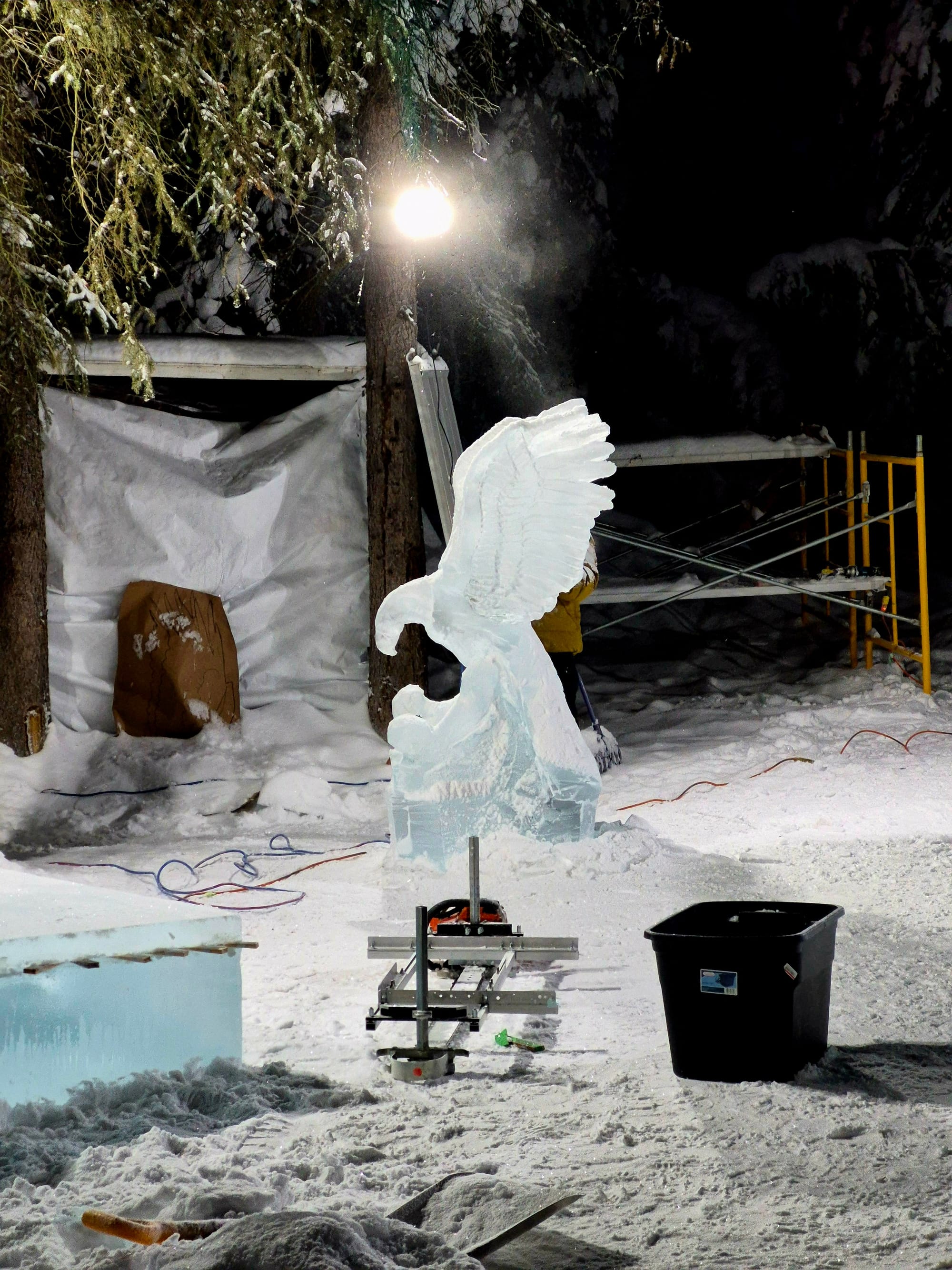
Beyond the competition entries, the grounds include illuminated public sculptures and demonstration pieces, creating a full winter installation rather than a simple exhibit. My favorite sculptures were the locomotive and a functional ice table tennis table.
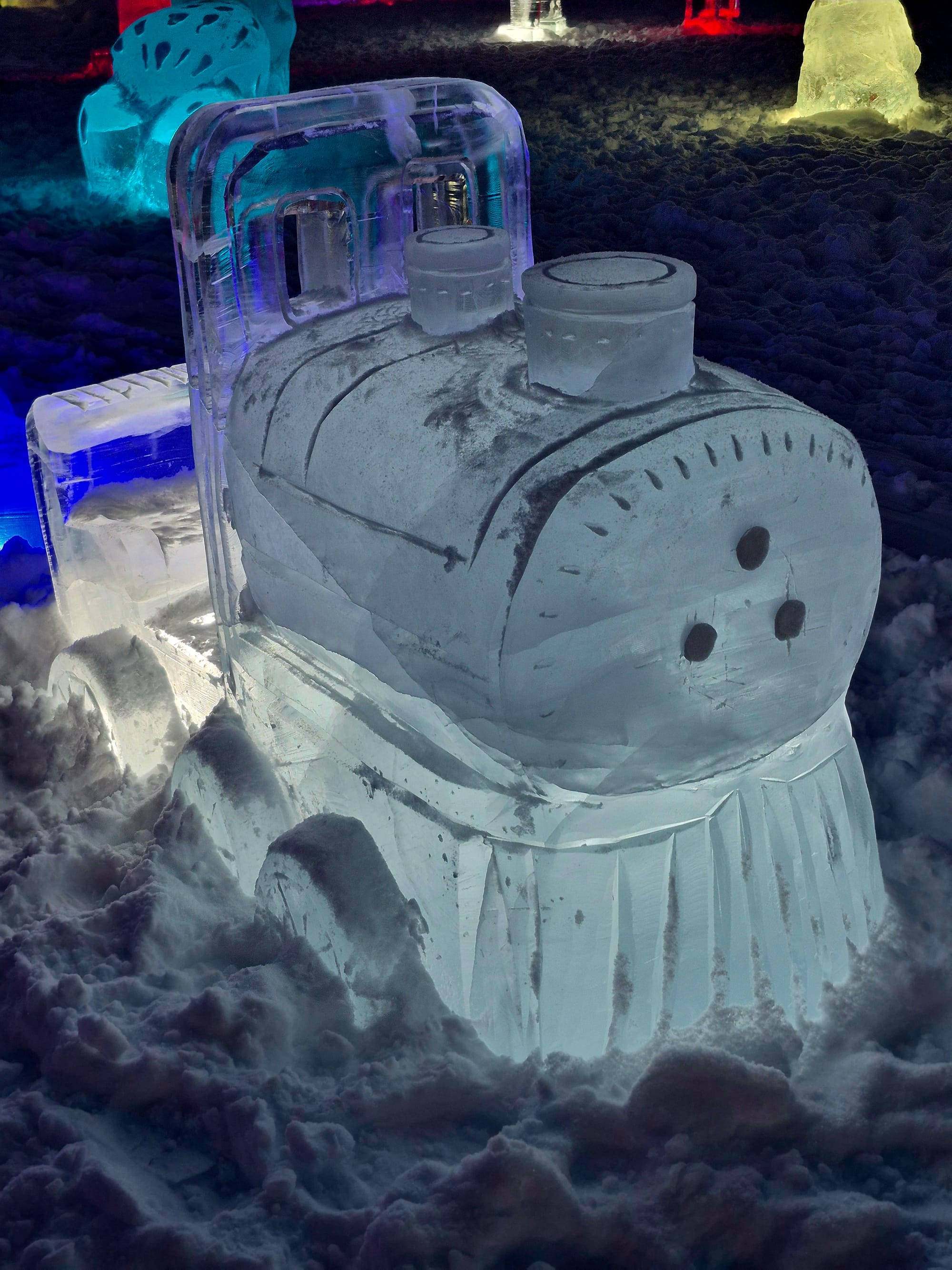
Interior Alaska does not simply endure winter. It engineers it into art.
Borealis Basecamp and Off-Grid Viewing
Fairbanks sits beneath the auroral oval, making it statistically one of the strongest Northern Lights locations in the United States. It is said that if you spend 3 nights in Fairbanks there is a 90% chance of seeing the aurora.
One aurora session and dinner took place at Borealis Basecamp outside Fairbanks, offering heated viewing space away from city light pollution. Dinner at Latitude 65, the restaurant at Borealis Basecamp, takes place inside a large heated yurt-style structure set apart from the glass igloo accommodations. The space is circular, warm and simple, designed for comfort in extreme cold. The menu highlights Alaskan ingredients — salmon, game meats and hearty winter dishes.
Prime viewing typically occurs between midnight and 2:00 am. Guaranteed sightings do not exist.
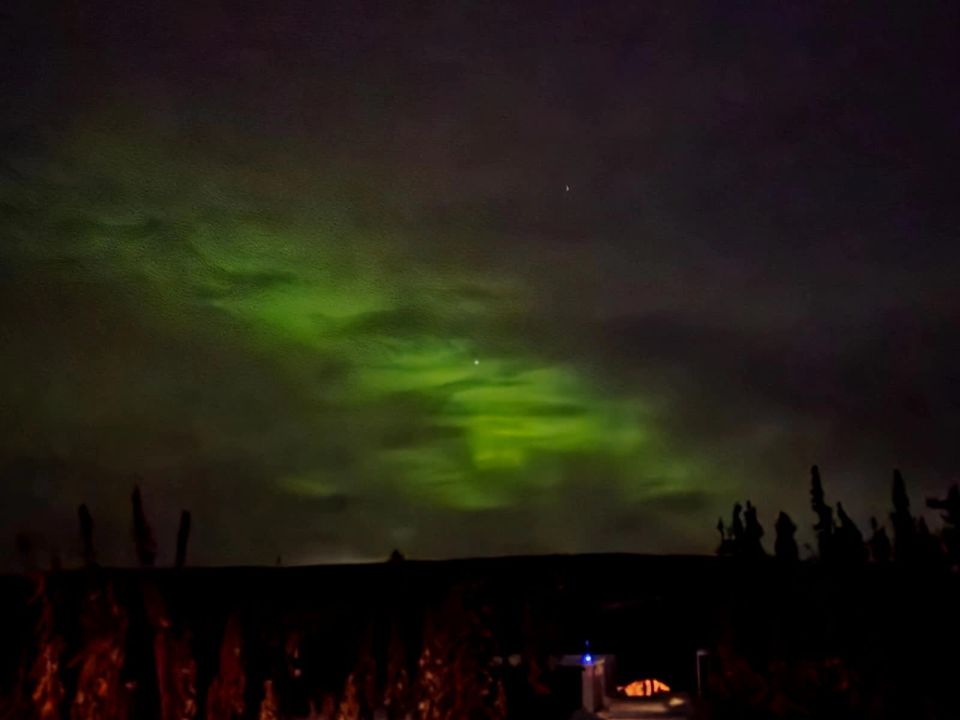
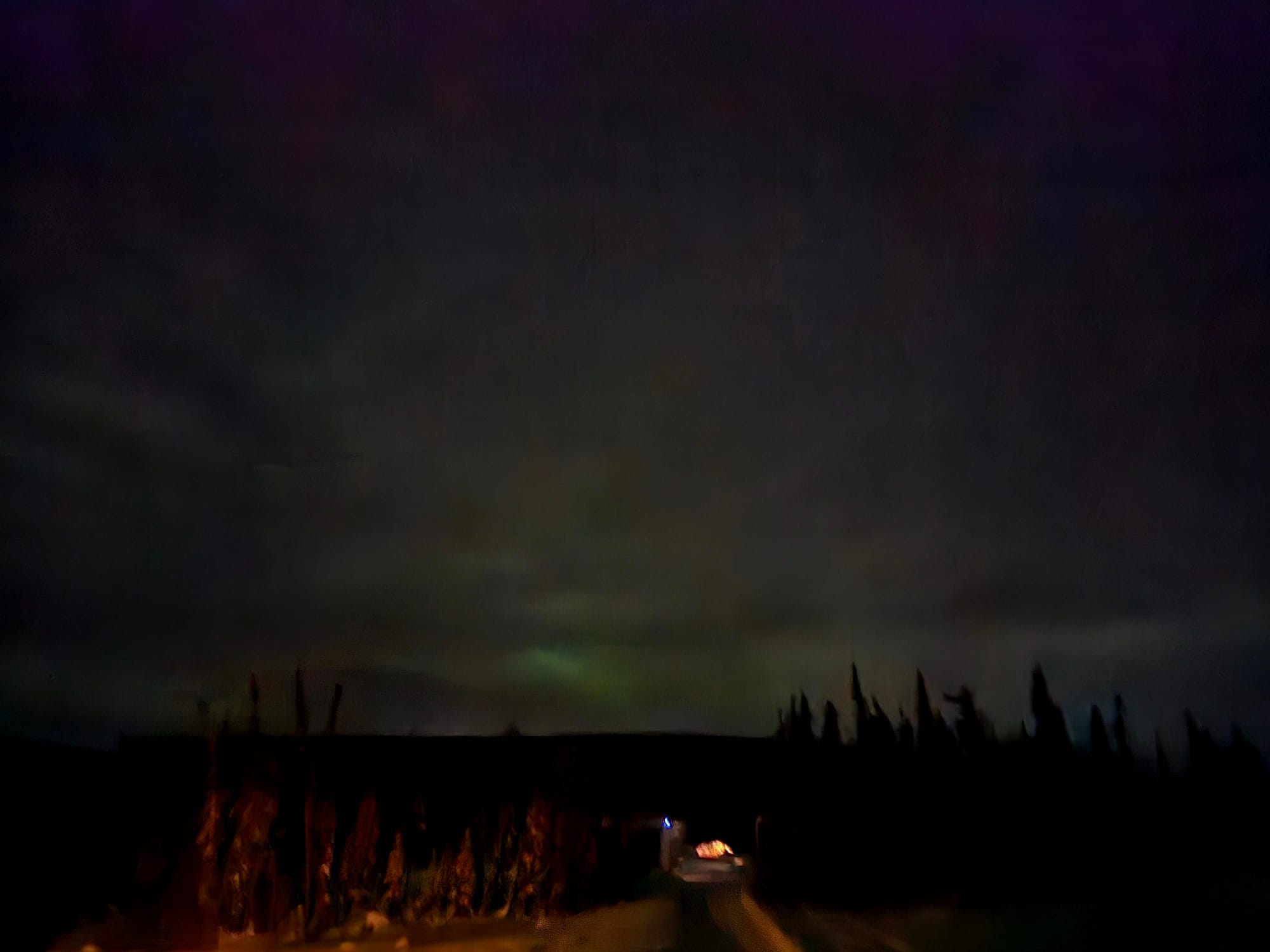
Cloud cover overrides even strong geomagnetic storms. Nature decides and our viewing was poor. We saw the aurora but only through the camera. It was interesting to learn how different the aurora appears to the naked eye compared to photographs. What looked like a faint grey or soft green haze was, in fact, active aurora. Human night vision relies on rod cells, which detect movement and contrast but struggle with color in low light. Cameras, especially with long exposures, amplify available light and pull out colors our eyes cannot see. The aurora is predominantly green, caused by oxygen molecules reacting with charged solar particles high above the Earth. The vivid purples and reds often seen in images require stronger geomagnetic activity and are far less common to observe without a camera. As a result, the dramatic colors that dominate social media are often seen in photography rather than by the naked eye.
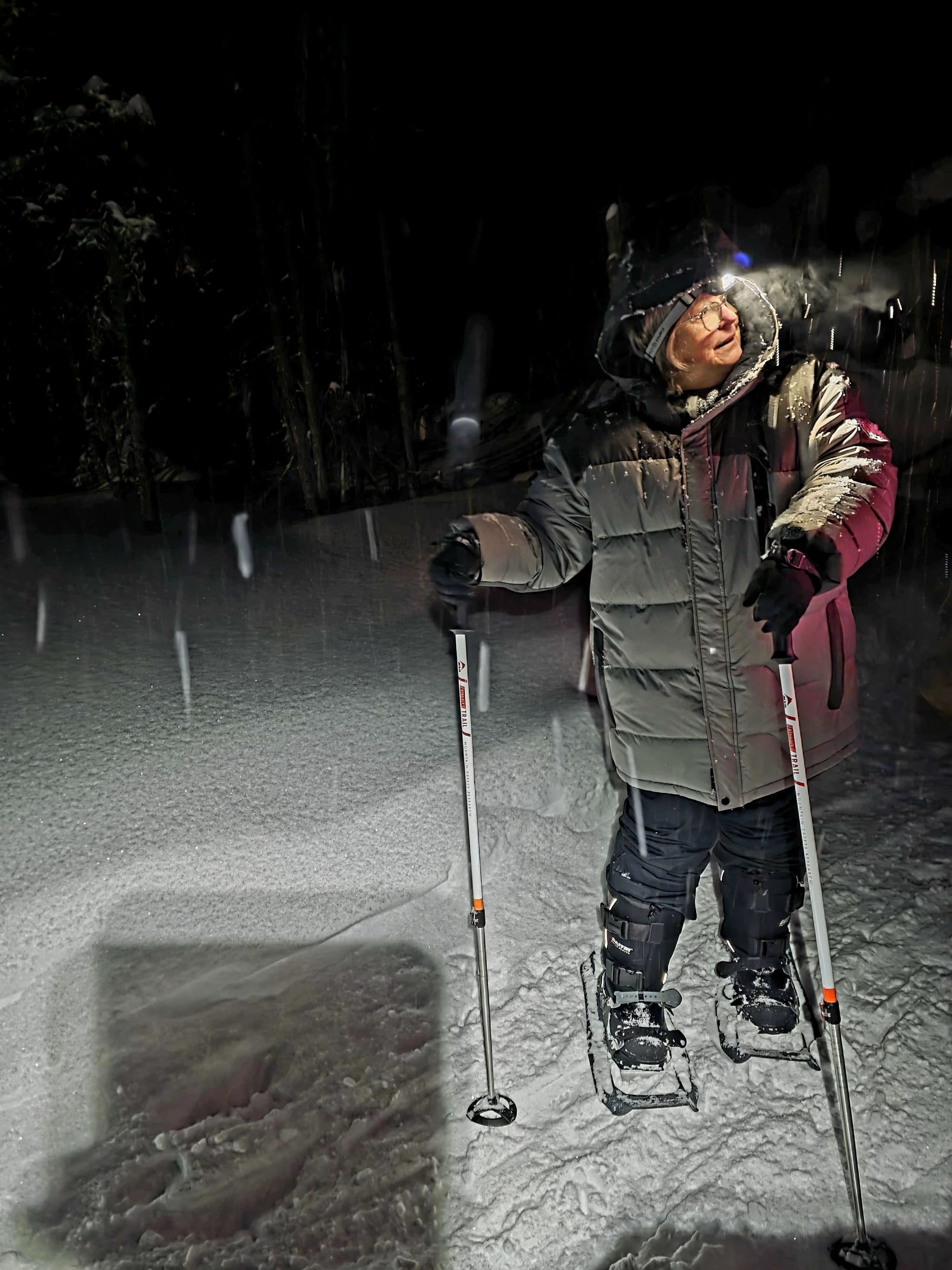
Later that evening we visited Aurora Bear, a private off-grid homestead. Our hosts Frank and Miriam were very hospitable as were their 3 dogs who sought attention and loves. Conditions were unfavorable for aurora viewing so we went snowshoeing instead. We snowshoed while it was snowing and it was great to experience time in the black birch forest with headlamps. I sank thigh deep in the soft snow at one point and had to shift my upper body onto firmer snow. Harrison and Brian had to manhandle me out of my the soft snow.
Frank is a professional photographer and offers aurora photography assistance. His assistance was not required this night as there was no aurora.
Chena Hot Springs and the Ice Museum
Activity: Chena Hot Springs and Ice Museum Tour
Chena Hot Springs Resort sits about 60 miles northeast of Fairbanks. The outdoor geothermal rock pool averages 106–109°F (41–43°C), even when air temperatures sit well below zero.
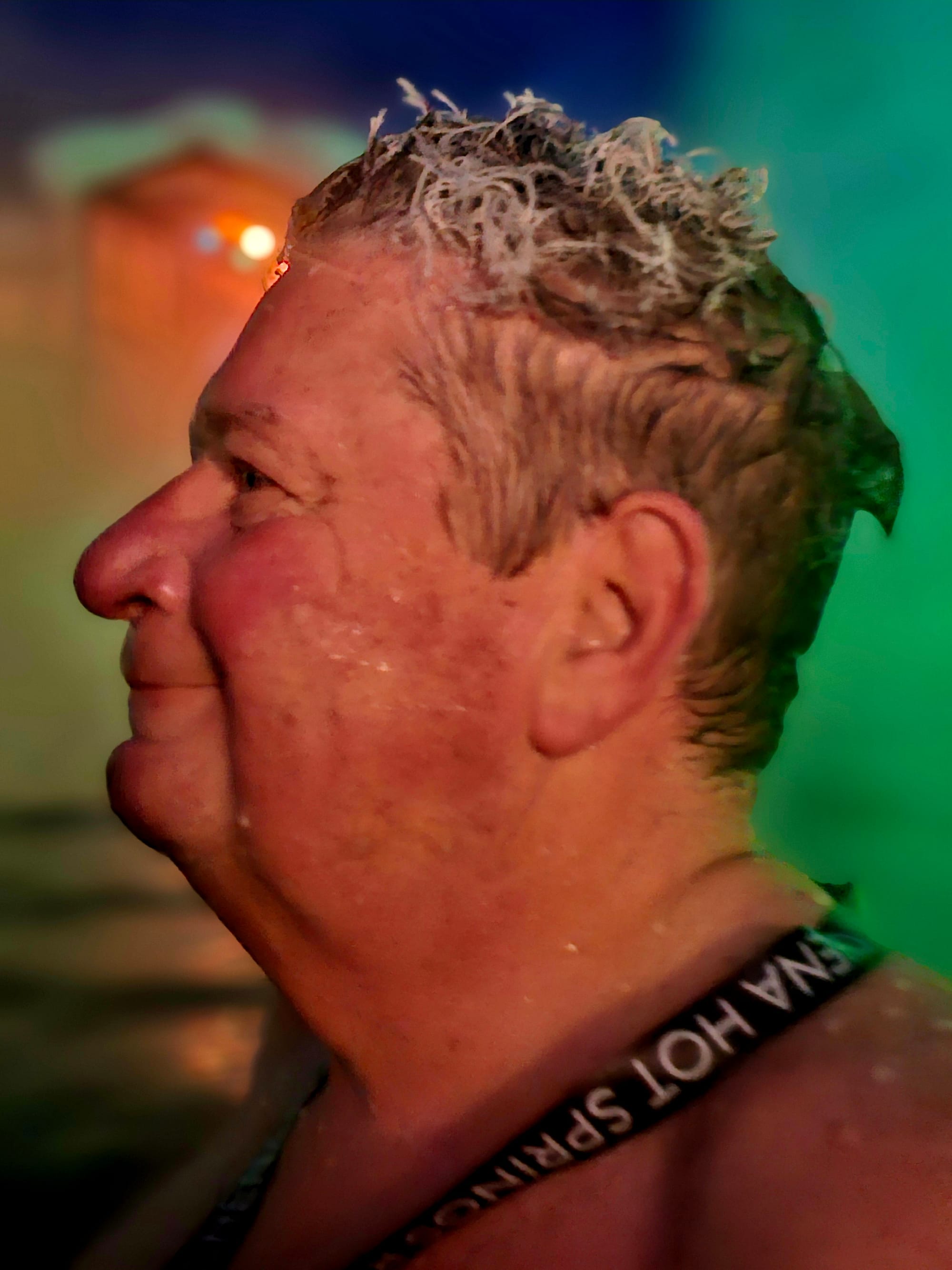
Steam rises into frozen air. Snow lines the rock edges. After repeated late-night aurora sessions, the mineral soak is a welcome respite from the cold. People end up sporting unusual hairstyles as hair freezes once wet and can be shaped into many different styles. The rising steam freezes onto nearby structures and creates many unusual shapes, some almost human like in appearance.
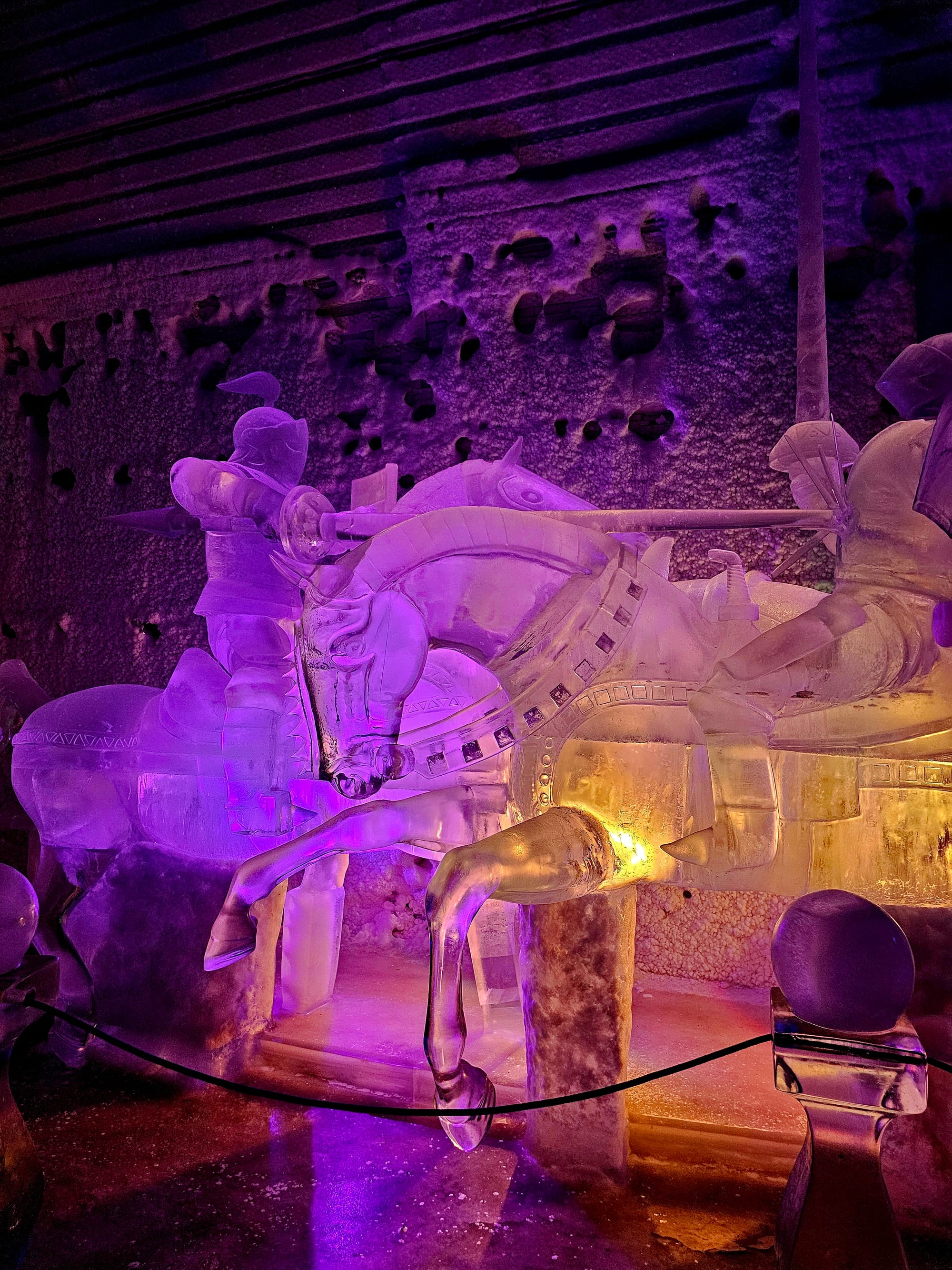
The Ice Museum at Chena is constructed from locally harvested ice and remains frozen year-round. Sculpted installations and frozen architecture reflect Interior Alaska’s ice-carving tradition. The Jouster ice sculpture was impressive and is a replica of a previous World Ice Art Championship winner from years ago that stood 36 feet high and is still in great condition. A few of the finer appendages like fingers and a tail have been replaced but otherwise everything is original. The statue is illuminated and is a very impressive.
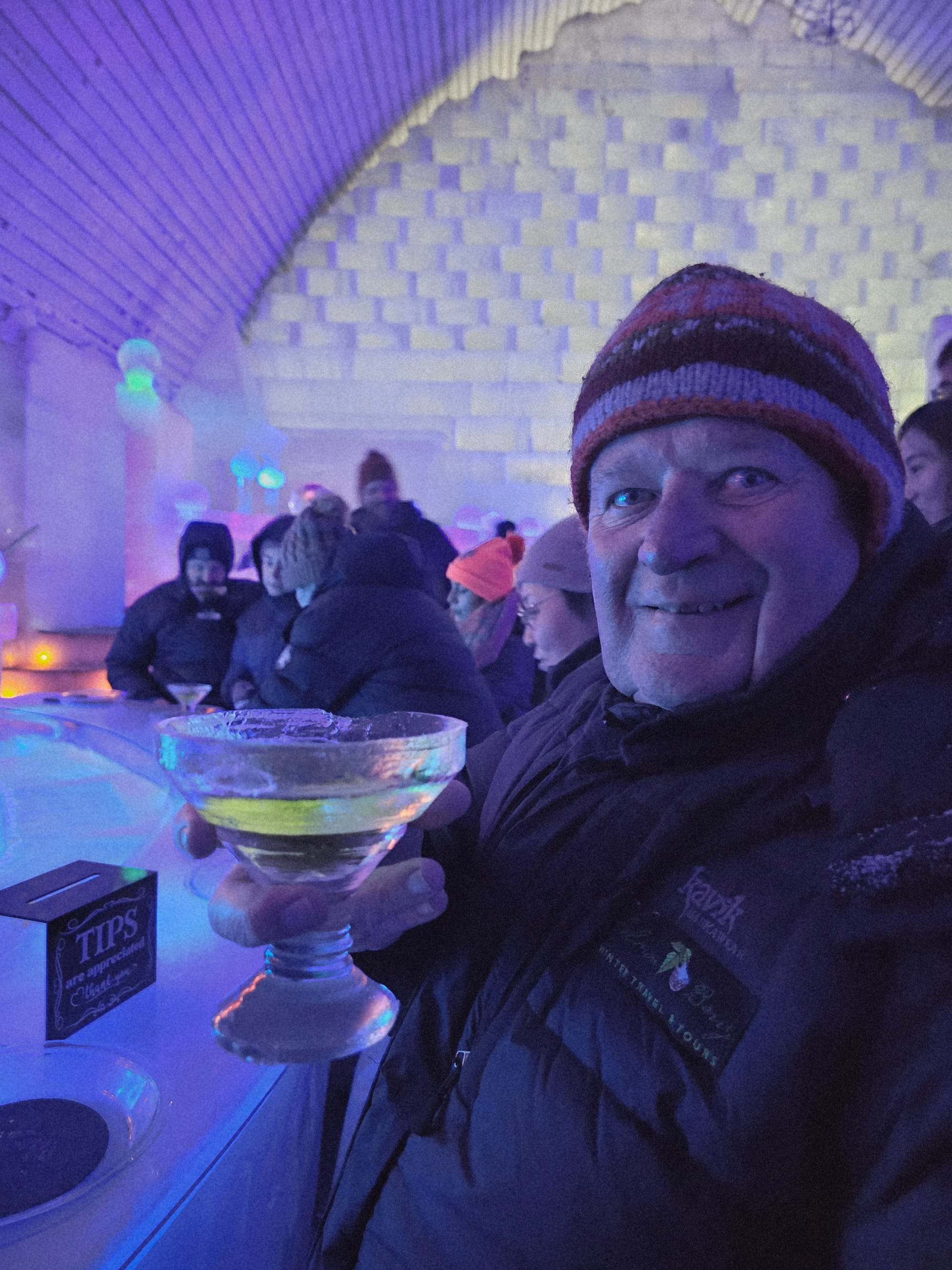
The signature Appletini cocktail, served in a carved ice glass, reinforces the frozen environment theme. A unique tradition after leaving the Ice Museum is to blow in your ice cocktail glass, wake a wish then smash the glass on the ground. My wish was that I would have a great aurora viewing later that night.
Fairbanks Beyond the Aurora
The Fairbanks City Tour includes:
- Museum of the North - at Fairbanks University. Impressive but not what I am into on an adventure trip.
- Great Alaskan Bowl Company - a local gift shop also not my cup of tea.
End of Tour Farewell Dinner
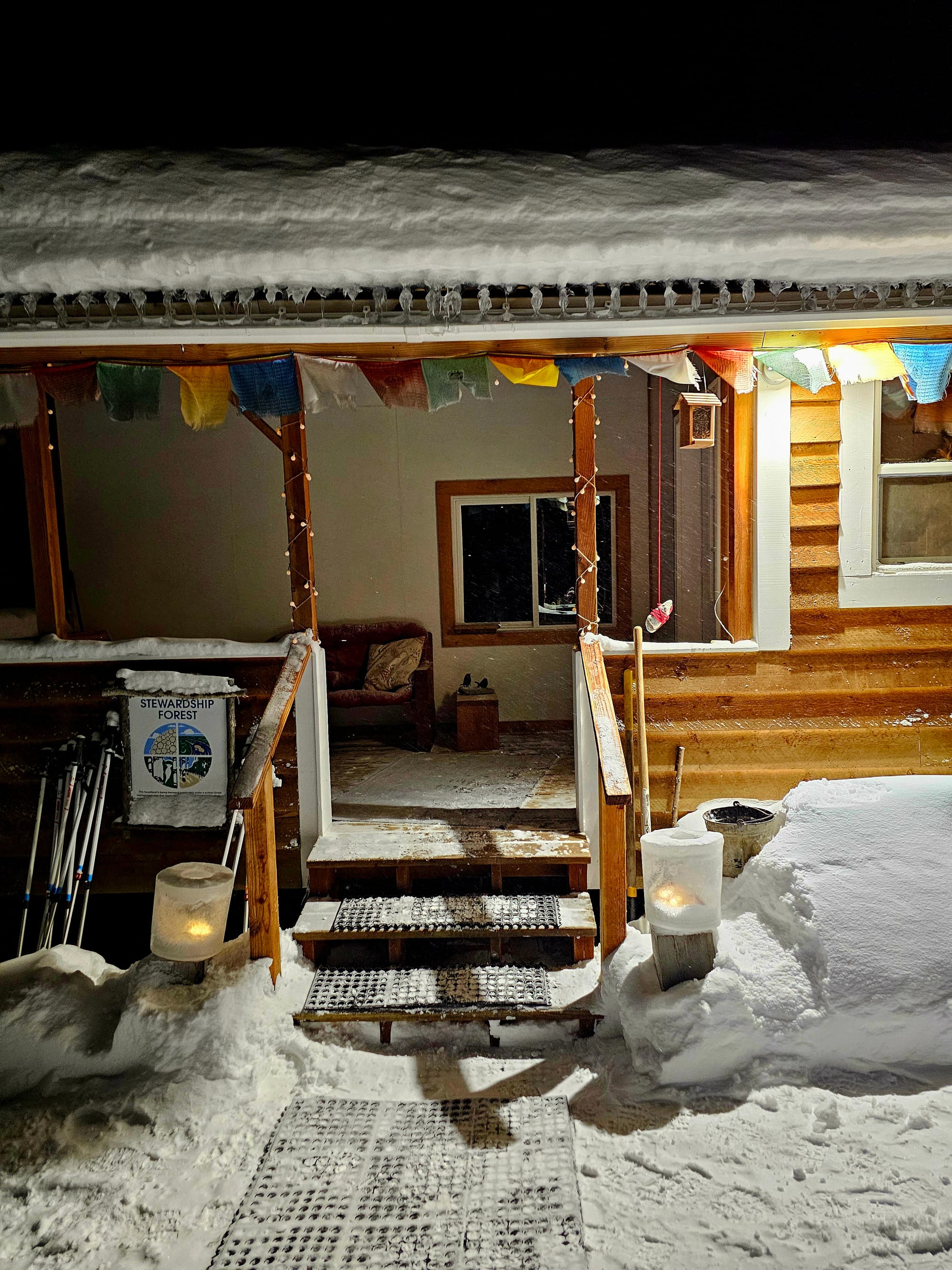
The farewell evening with Aurora Bear was built around a classic Alaskan-style BBQ. Frank’s Aurora Burgers, veggie burgers, salmon burger or salmon steaks came with all the fixings.It was hearty, unfussy and was the perfect way to end the trip.
Winter Alaska requires preparation, patience and tolerance for late nights. Aurora viewing demands flexibility but structured logistics make it easier.
If you’re planning a trip, I keep the booking tools I actually use at https://www.traveladventurescurated.com/about/
Disclosure
This site contains affiliate links. If you book through them, I may earn a commission at no extra cost to you. Thanks for supporting the site.